Mon Prof Augmenté
The Four Sections of an Orchestra
Age 13 · Music
Open to everyone until Monday, November 23
To keep it, print it while it is open.
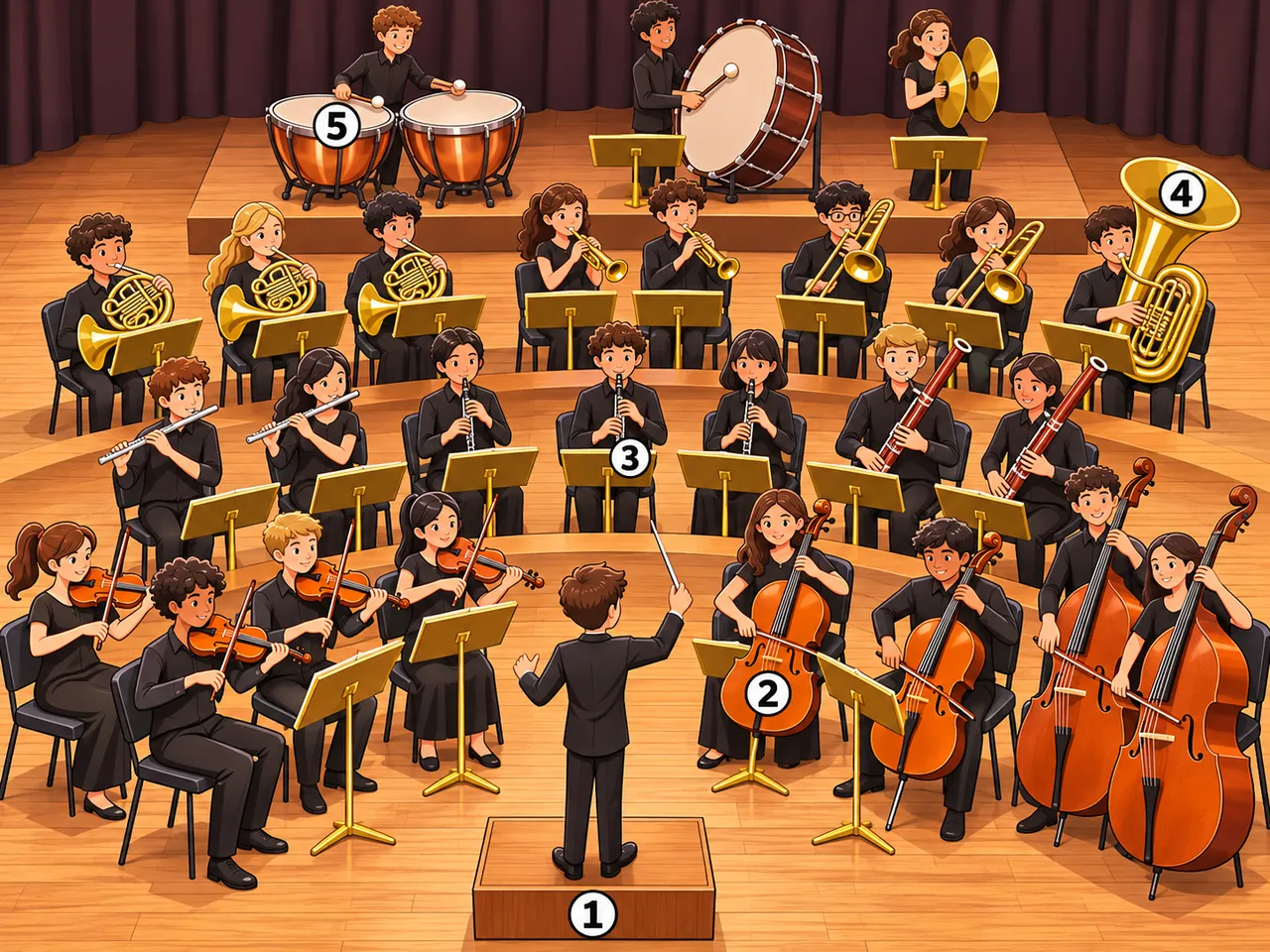
A symphony orchestra groups its instruments into four families: strings, woodwind, brass and percussion. Each family sits together as a section, and the conductor keeps them all playing as one.
In the picture
- Conductor on the podium: sets the tempo and cues each section
- String section: violins, violas, cellos and double basses, played with a bow or plucked
- Woodwind section: flutes, oboes, clarinets and bassoons, played by blowing across a hole or through a reed
- Brass section: horns, trumpets, trombones and tuba, played by buzzing the lips into a mouthpiece
- Percussion section: timpani, bass drum and cymbals, played by striking or shaking
Examples
- Film soundtracks often use the brass section for heroic themes and the strings for emotional moments
- A school band or youth orchestra sits in sections so players of the same family can hear each other
Key takeaways
- The four orchestra families are strings, woodwind, brass and percussion
- Strings sit at the front and percussion at the back, so quieter instruments are closest to the audience
Quiz: The Four Sections of an Orchestra (Age 13)
-
What are the four instrument families of a symphony orchestra?
-
Why do the strings sit at the front of the orchestra and the percussion at the back?
-
How does a trumpet player make a sound?
The answers, each with its explanation, are in the app. This quiz is free there while the lesson is in the free week.
Get the app
Free app, optional subscription
App Store Google Play
Carry on in the app
At least one new illustrated lesson every weekday for your child’s year, with its quiz and a reminder at 6:15 pm.
Your child’s teacher does not use My Enhanced Teacher yet?
Tell them about it