Mon Prof Augmenté
The Four Families of the Orchestra
Age 13 · Music

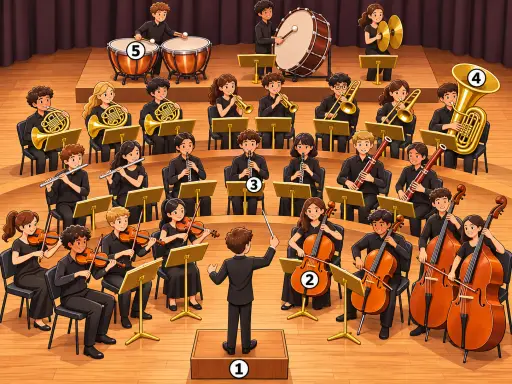
A symphony orchestra groups its instruments into four families: strings, woodwinds, brass and percussion. Each family makes its sound in a different way, by vibrating strings, air, buzzing lips or a struck surface.
This picture is part of the full library
Every lesson is open to everyone for 7 days after it is published. This one came out on November 12, 2026: its text stays readable here, and its picture opens with a subscription.
The app is free. A subscription opens every lesson, in every school year.
Age 13: open this week
Browse Age 13


In the picture
- Strings: a bow or a finger makes the strings vibrate, and the wooden body makes the sound louder
- Woodwinds: air blown across an edge or through a reed vibrates inside the tube
- Brass: the player’s lips buzz into a cup-shaped mouthpiece, and valves or a slide change the note
- Percussion: the instrument sounds when it is struck, shaken or scraped
Examples
- Plucking a guitar string makes it vibrate, just like the strings of a violin or cello.
- Blowing across the top of an empty bottle makes a note, the same way a flute works.
Key takeaways
- Every musical sound comes from something vibrating: a string, a column of air, the lips or a surface.
- Shorter strings and tubes give higher notes; longer ones give lower notes.
Quiz: The Four Families of the Orchestra (Age 13)
-
How does a brass instrument, like a trumpet, make its sound?
-
A trombone player pushes the slide out, which makes the tube longer. What happens to the note?
-
What do the sounds of all four orchestra families have in common?
The answers, each with its explanation, are in the app. This lesson has left the free week, so its quiz is part of the subscription.
Free app, optional subscription
App Store Google Play
Carry on in the app
At least one new illustrated lesson every weekday for your child’s year, with its quiz and a reminder at 6:15 pm.
Your child’s teacher does not use My Enhanced Teacher yet?
Tell them about it