Mon Prof Augmenté
Power Looms in a Mill

In the 1800s, steam engines turned shafts and belts that drove rows of looms inside large mills. Cloth that took a hand weaver days could be made in hours by machine.
This picture is part of the full library
Every lesson is open to everyone for 7 days after it is published. This one came out on September 15, 2026: its text stays readable here, and its picture opens with a subscription.
The app is free. A subscription opens every lesson, in every school year.
Age 13: open this week
Browse Age 13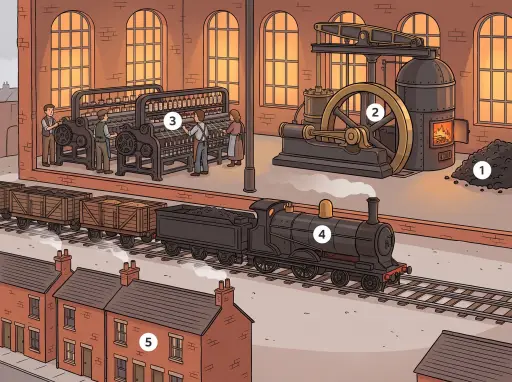
In the picture
- Leather belt — it carries turning power from the overhead shaft down to the loom.
- Iron frame — the machine that throws the shuttle and beats the thread into cloth.
- Wooden spool — it holds the thread that feeds into the loom.
- Tall window — it lights the long workroom where the looms stand in rows.
Examples
- A bicycle chain passing power from the pedals to the back wheel.
- A factory conveyor belt moving parts along a line.
Key takeaways
- Steam power let machines run faster and all together inside one large building.
- Machine weaving made cloth cheaper and moved work from homes into factories.
Carry on in the app
Three questions on this lesson. It has left the free week, so its quiz is for subscribers.
At least one new illustrated lesson every weekday for your child’s year, with its quiz and a reminder at 6:15 pm.
Get the app
Free app, optional subscription
App Store Google Play