Mon Prof Augmenté
A Factory Town Powered by Coal
Age 13 · History
Open to everyone until Monday, November 23
To keep it, print it while it is open.
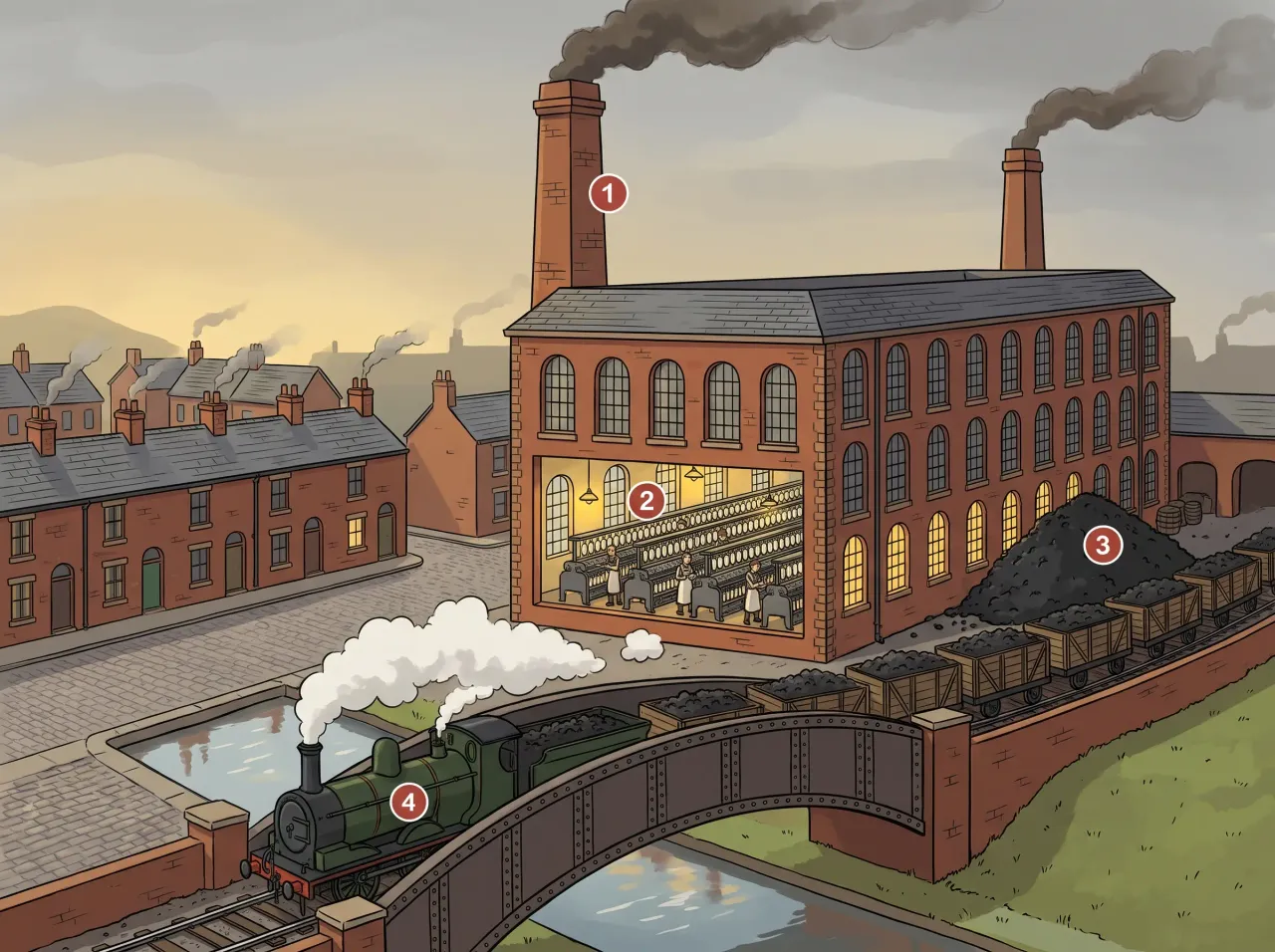
From the late 1700s, Britain began using coal-burning steam engines to run machines in huge factories, and railways soon carried goods and people fast. Millions of people moved from farms into crowded towns to work long hours beside these machines.
In the picture
- Factory chimney: smoke from burning coal to power steam engines
- Spinning machines: many threads spun at once, replacing work done by hand at home
- Coal heap: the fuel that heated water into steam
- Steam locomotive: railways moving coal, goods and people quickly
Examples
- The clothes you wear are woven by machines in factories, an idea that grew from the first textile mills.
- Train timetables and fixed working hours both come from the age of railways and factories.
Key takeaways
- The Industrial Revolution started in Britain in the late 18th century.
- Steam power from coal changed where people lived and how they worked.
Quiz: A Factory Town Powered by Coal (Age 13)
-
Where and when did the Industrial Revolution begin?
-
Why did factories burn so much coal?
-
How did steam-powered factories change where many people lived?
The answers, each with its explanation, are in the app. This quiz is free there while the lesson is in the free week.
Get the app
Free app, optional subscription
App Store Google Play
Carry on in the app
At least one new illustrated lesson every weekday for your child’s year, with its quiz and a reminder at 6:15 pm.
Your child’s teacher does not use My Enhanced Teacher yet?
Tell them about it