Mon Prof Augmenté
Water levels and rooftop tanks
Age 12 · Physics
Open to everyone until Monday, October 26
To keep it, print it while it is open.
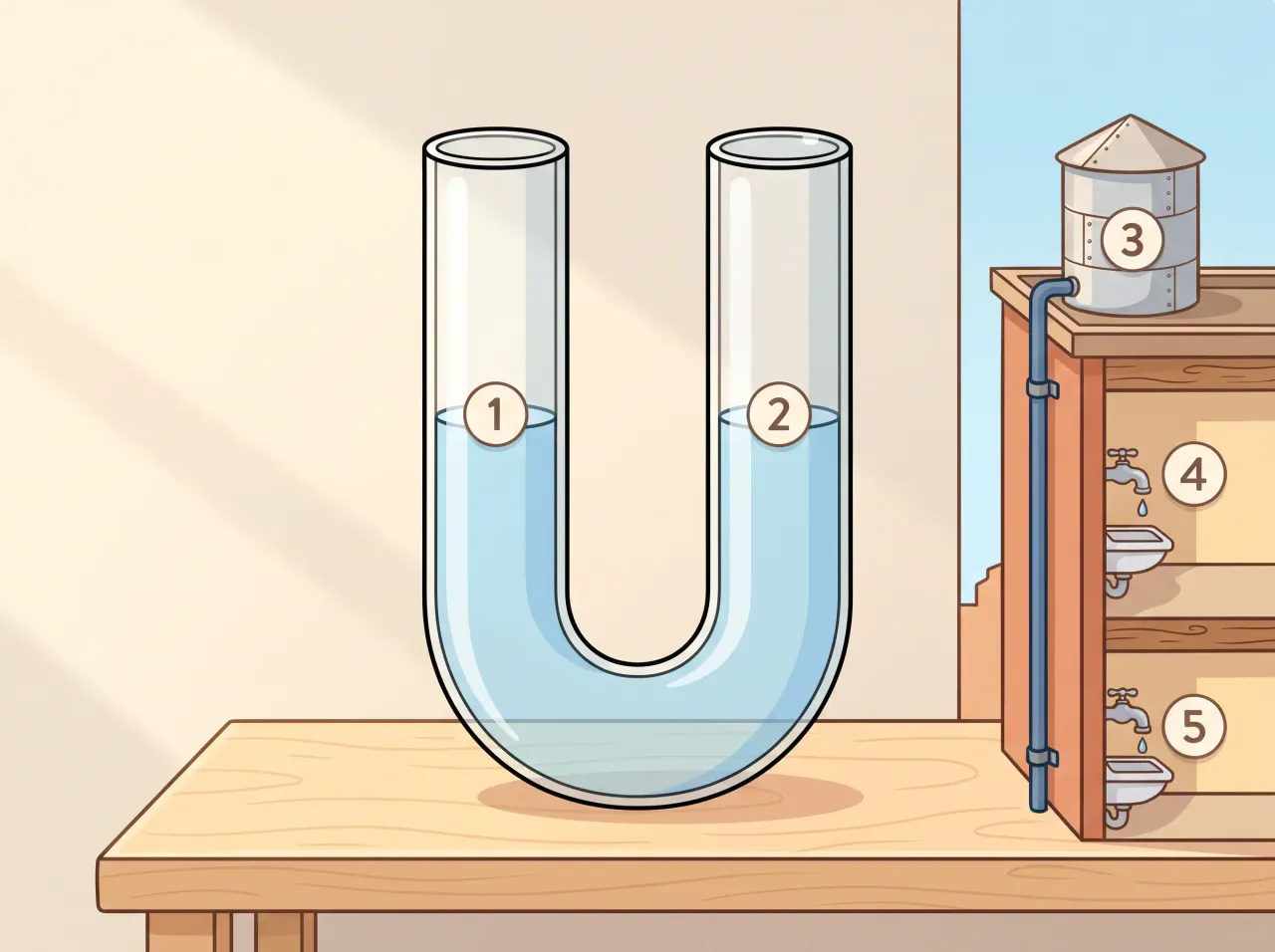
Water in connected containers settles at the same height when it can move freely. A tank placed high on a roof uses the height of the water above a faucet to supply floors below it.
In the picture
- The left water surface in the U-shaped tube: it rests at the same height as the right water surface.
- The right water surface in the U-shaped tube: it rests at the same height as the left water surface.
- The rooftop tank: a high container that holds water above the building.
- The top-floor faucet: an outlet near the tank, reached by water flowing down the pipe.
- The ground-floor faucet: an outlet lower in the building, reached through the same pipe.
Examples
- A rooftop water tank feeding a bathroom tap.
- Two clear cups joined by a tube, with water settling at one level.
Key takeaways
- Connected water settles at the same level when it can flow freely.
- A taller water column pushes water out with more pressure.
Quiz: Water levels and rooftop tanks (Age 12)
-
In connected containers where water can flow freely, how do the water surfaces settle?
-
What does a taller water column do to the pressure at an outlet?
-
Why can a rooftop tank supply water to faucets below it?
The answers, each with its explanation, are in the app. This quiz is free there while the lesson is in the free week.
Get the app
Free app, optional subscription
App Store Google Play
Carry on in the app
At least one new illustrated lesson every weekday for your child’s year, with its quiz and a reminder at 6:15 pm.
Your child’s teacher does not use My Enhanced Teacher yet?
Tell them about it