Mon Prof Augmenté
Melting Ice in a Sealed Flask
Age 12 · Chemistry
Open to everyone until Tuesday, November 24
To keep it, print it while it is open.
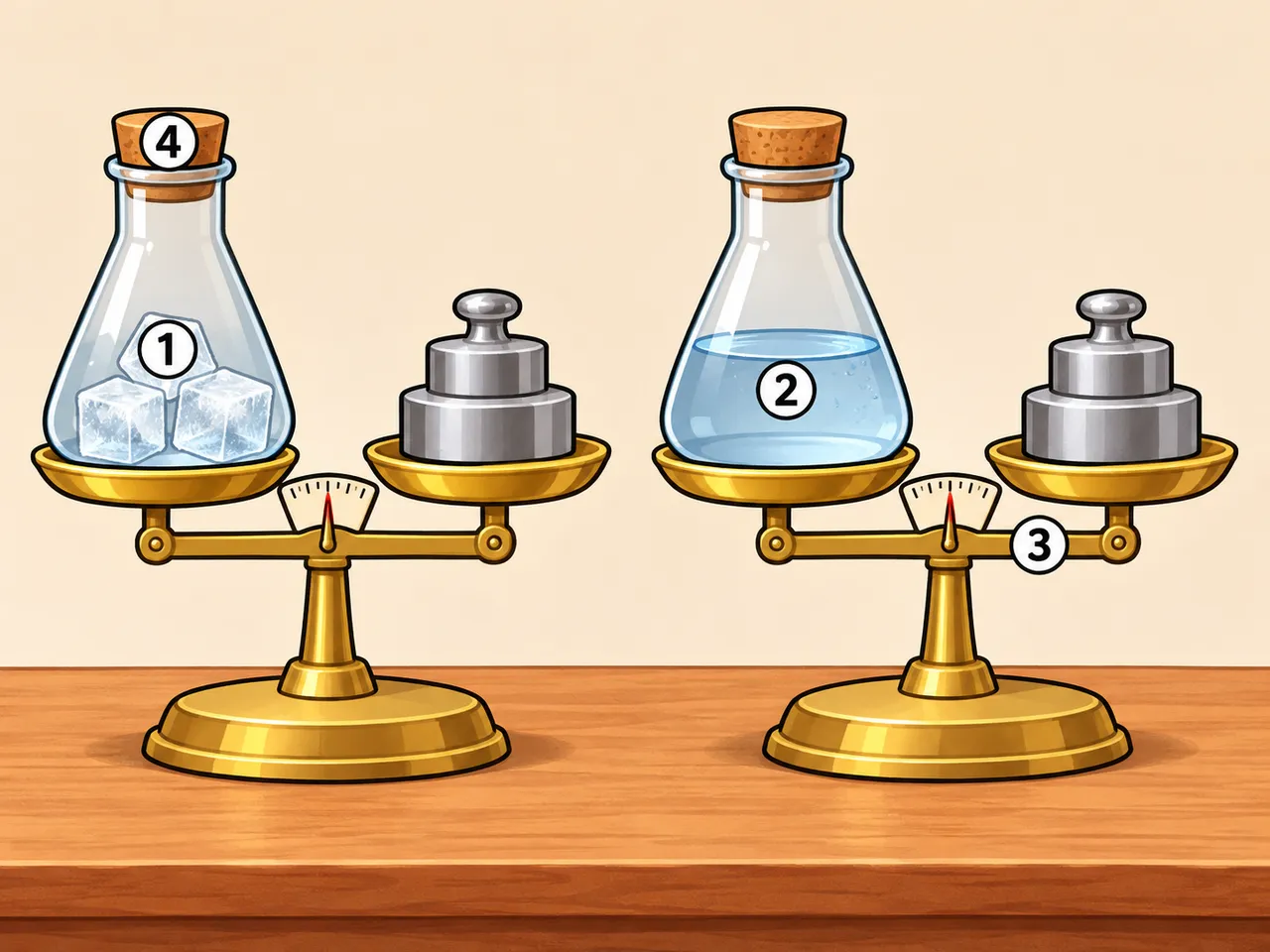
When ice melts, it changes from solid to liquid, but nothing is added or lost. If the flask stays sealed, the scale reads exactly the same before and after.
In the picture
- Sealed flask of ice cubes: matter in its solid state
- Sealed flask of liquid water: the same matter after melting
- Level balance beam: both flasks have the same mass
- Cork stopper: keeps all the matter inside the flask
Examples
- A sealed bottle of frozen juice weighs the same once it thaws.
- A closed pot of water weighs the same as a pot of ice made from it.
Key takeaways
- Changing state does not change the mass.
- Matter is never created or destroyed, only rearranged.
Quiz: Melting Ice in a Sealed Flask (Age 12)
-
A sealed flask of ice melts completely into water. What happens to the mass the scale shows?
-
When matter changes state, for example from solid to liquid, what happens to the matter itself?
-
Why does the flask have to stay sealed for the scale to read the same before and after melting?
The answers, each with its explanation, are in the app. This quiz is free there while the lesson is in the free week.
Get the app
Free app, optional subscription
App Store Google Play
Carry on in the app
At least one new illustrated lesson every weekday for your child’s year, with its quiz and a reminder at 6:15 pm.
Your child’s teacher does not use My Enhanced Teacher yet?
Tell them about it