Mon Prof Augmenté
Solar Eclipse Shadows
A solar eclipse happens when the Moon moves between the Sun and Earth and blocks sunlight. The middle of the Moon’s shadow is darkest, and the lighter edge around it makes a different kind of eclipse.
This picture is part of the full library
Every lesson is open to everyone for 7 days after it is published. This one came out on September 17, 2026: its text stays readable here, and its picture opens with a subscription.
The app is free. A subscription opens every lesson, in every school year.
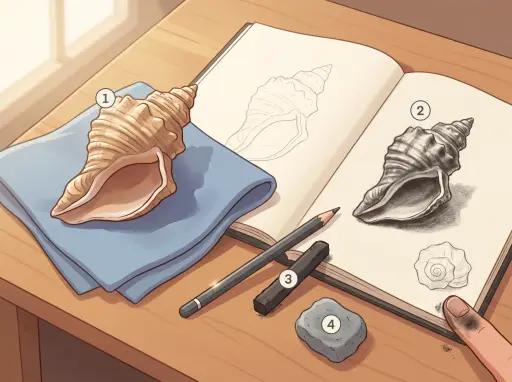
In the picture
- The Moon: the grey ball that blocks sunlight.
- The central shadow: the dark oval where sunlight is fully blocked.
- The outer half-shadow: the lighter oval where sunlight is partly blocked.
Examples
- A ball held between a lamp and a wall makes a dark middle spot with a soft edge.
- Your own shadow is darkest in the middle and softer at the edges.
Key takeaways
- The Moon’s central shadow causes a total solar eclipse.
- The wider outer half-shadow causes only a partial solar eclipse.
Carry on in the app
Three questions on this lesson. It has left the free week, so its quiz is for subscribers.
At least one new illustrated lesson every weekday for your child’s year, with its quiz and a reminder at 6:15 pm.
Get the app
Free app, optional subscription
App Store Google Play