Mon Prof Augmenté
The ice–albedo feedback
Age 17 · Science
Open to everyone until Wednesday, November 25
To keep it, print it while it is open.
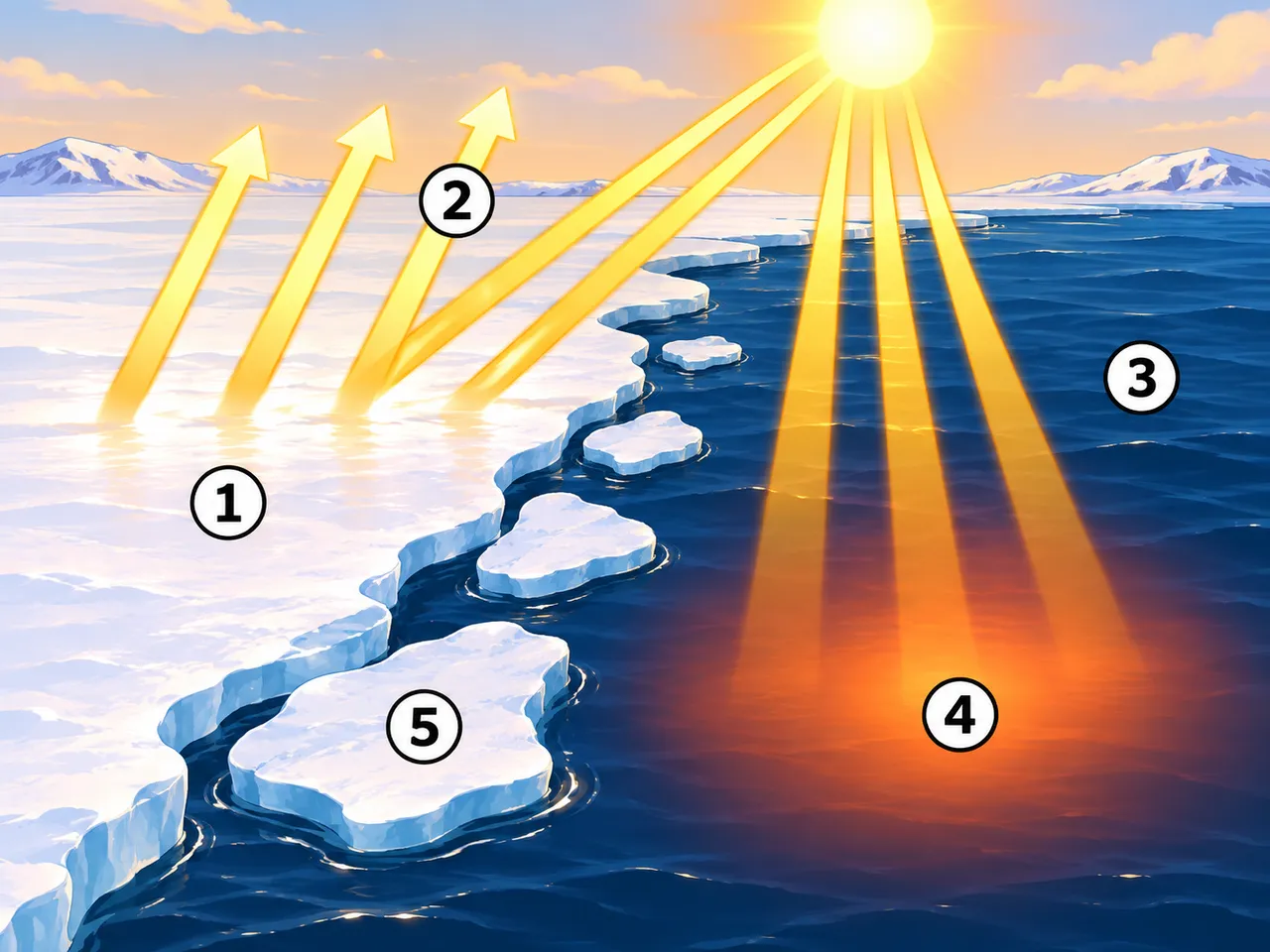
Bright sea ice reflects most of the sunlight that hits it, while dark open ocean absorbs most of it. When warming melts ice, the newly exposed water takes in more heat, which melts even more ice and amplifies the warming.
In the picture
- Sea ice: a bright surface with high albedo
- Reflected sunlight: most of the energy goes back to space
- Open ocean: a dark surface with low albedo
- Absorbed sunlight: the energy warms the water
- Melting floes: warmer water removes more ice, and the loop repeats
Examples
- A black T-shirt feels much hotter in the sun than a white one, because it absorbs more light.
- Fresh snow stays cold and dazzling in sunshine, while a cleared dark road next to it warms up and dries quickly.
Key takeaways
- Albedo is the fraction of sunlight a surface reflects: roughly 0.5–0.9 for sea ice and snow, about 0.06 for open ocean.
- It is a positive feedback: the result of warming (less ice) causes more warming, which is one reason the Arctic warms faster than the global average.
Quiz: The ice–albedo feedback (Age 17)
-
What does the albedo of a surface measure?
-
Why is the ice–albedo effect called a positive feedback?
-
When sea ice melts and leaves open ocean in its place, what happens to the sunlight reaching that area?
The answers, each with its explanation, are in the app. This quiz is free there while the lesson is in the free week.
Get the app
Free app, optional subscription
App Store Google Play
Carry on in the app
At least one new illustrated lesson every weekday for your child’s year, with its quiz and a reminder at 6:15 pm.
Your child’s teacher does not use My Enhanced Teacher yet?
Tell them about it