Mon Prof Augmenté
Night-Vision Goggles
Open to everyone until Thursday, October 1
To keep it, print it while it is open.
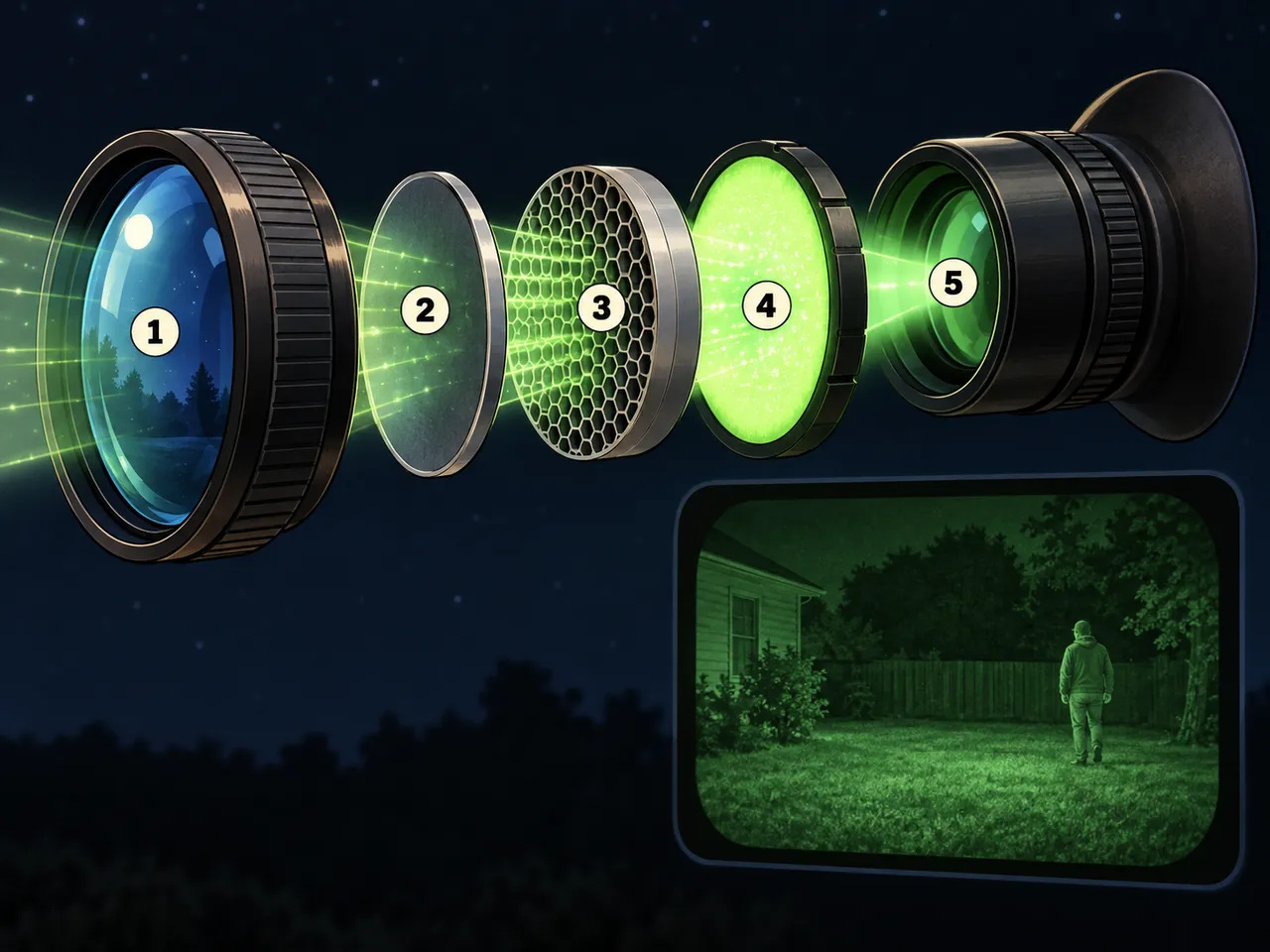
Night-vision goggles take in faint moonlight or starlight. They turn photons into electrons, multiply the electrons in tiny channels, and make a green image on a phosphor screen.
In the picture
- Objective lens: gathers faint light from the dark scene.
- Photocathode plate: converts incoming photons into electrons.
- Microchannel plate: multiplies electrons through many tiny channels.
- Phosphor screen: turns the electron stream into visible green light.
- Eyepiece: lets the eye view the brightened green image.
Examples
- A soldier watching a dark field through night-vision goggles.
- A wildlife observer spotting nocturnal animals without a bright flashlight.
Key takeaways
- Faint light is amplified electronically, not by making the scene brighter with lamps.
- The image appears green because a phosphor screen glows when electrons hit it.
Carry on in the app
Three questions on this lesson, to check the idea stuck. Free in the app while the lesson is in the free week.
At least one new illustrated lesson every weekday for your child’s year, with its quiz and a reminder at 6:15 pm.
Get the app
Free app, optional subscription
App Store Google Play