Mon Prof Augmenté
A ball thrown through the air
Age 17 · Physics
Open to everyone until Monday, November 23
To keep it, print it while it is open.
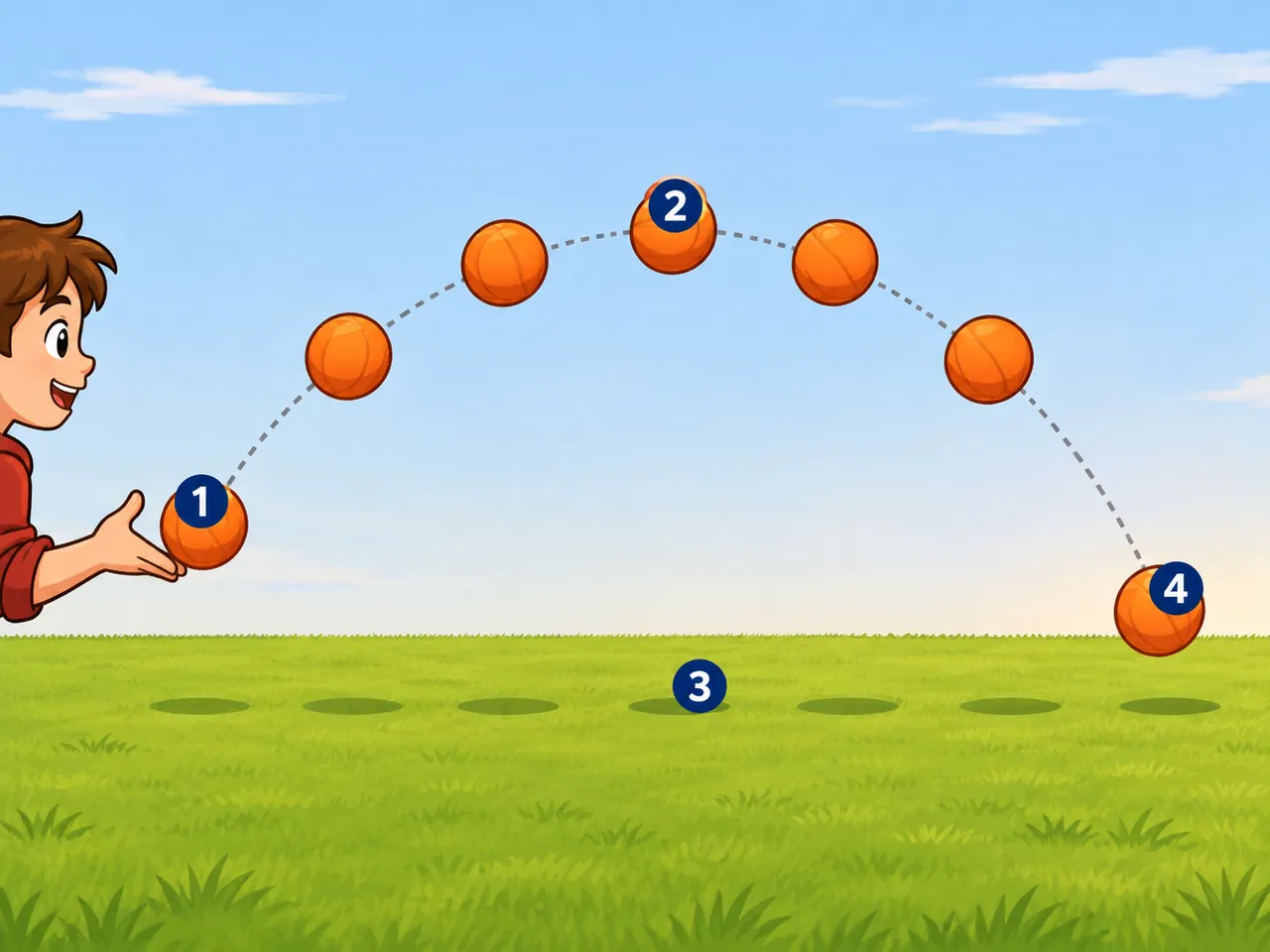
Once a ball leaves the hand, only gravity acts on it, so it moves sideways at a steady speed while its up-and-down speed keeps changing. Together these two motions draw a smooth, symmetric arch called a parabola.
In the picture
- Launch point: the ball leaves the hand with both a sideways and an upward speed
- Top of the arc: the upward speed is zero for an instant, the sideways speed is unchanged
- Ground shadow: it moves sideways by equal steps in equal times
- Landing point: the ball comes down at the same height it started, mirroring the rise
Examples
- A basketball shot curving into the hoop
- Water arching from a garden hose
Key takeaways
- Horizontal velocity stays constant because gravity pulls only downward
- Vertical velocity drops steadily, passes through zero at the top, then points downward
Quiz: A ball thrown through the air (Age 17)
-
After the ball leaves the hand, what happens to its sideways speed during the flight?
-
At the very top of the arc, which description is right?
-
How does the ball’s up-and-down speed change during the whole flight?
The answers, each with its explanation, are in the app. This quiz is free there while the lesson is in the free week.
Get the app
Free app, optional subscription
App Store Google Play
Carry on in the app
At least one new illustrated lesson every weekday for your child’s year, with its quiz and a reminder at 6:15 pm.
Your child’s teacher does not use My Enhanced Teacher yet?
Tell them about it