Mon Prof Augmenté
Antennae Touching
Age 17 · Animals
Ants tap each other’s heads with their antennae. The antennae pick up chemical signals that tell one ant whether another belongs to its colony and what role it has.
This picture is part of the full library
Every lesson is open to everyone for 7 days after it is published. This one came out on September 21, 2026: its text stays readable here, and its picture opens with a subscription.
The app is free. A subscription opens every lesson, in every school year.


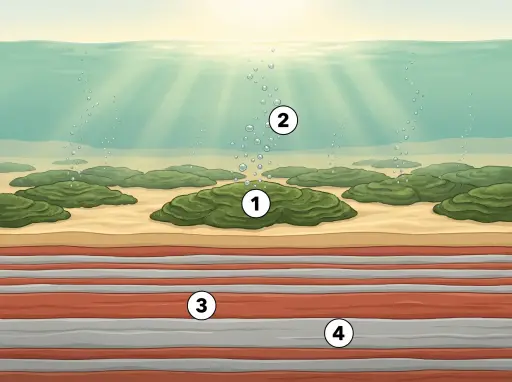
In the picture
- Tip of one ant’s antenna: samples chemical traces on the other ant’s head.
- Tip of the other ant’s antenna: samples chemical traces in return.
- Base of the first antenna: joins the head and passes sensory input inward.
- Base of the other antenna: joins the head and passes sensory input inward.
Examples
- A worker ant returning to the nest touches antennae with a guard at the entrance.
- Two ants from different colonies may react differently after their antennae make contact.
Key takeaways
- Antennae are the main chemical sense organs on an ant’s head.
- Brief antenna-to-antenna contact can carry information about colony identity and role.
Quiz: Antennae Touching (Age 17)
-
According to the card, what are an ant’s antennae mainly used as?
-
What can a brief antenna-to-antenna contact tell one ant about another?
-
When an ant taps another ant’s head, what does the tip of its antenna do?
The answers, each with its explanation, are in the app. This lesson has left the free week, so its quiz is part of the subscription.
Free app, optional subscription
App Store Google Play
Carry on in the app
At least one new illustrated lesson every weekday for your child’s year, with its quiz and a reminder at 6:15 pm.
Your child’s teacher does not use My Enhanced Teacher yet?
Tell them about it