Mon Prof Augmenté
Volcanoes Ice and Early Oceans
Age 15 · Environmental Science

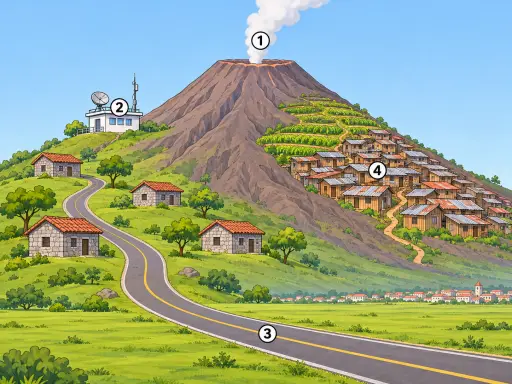
Long ago, volcanoes released hot gases and water vapor into the air. Icy comets and asteroids struck the young planet, adding more water and gases that cooled into the first oceans and atmosphere.
This picture is part of the full library
Every lesson is open to everyone for 7 days after it is published. This one came out on September 23, 2026: its text stays readable here, and its picture opens with a subscription.
The app is free. A subscription opens every lesson, in every school year.
Age 15: open this week
Browse Age 15
In the picture
- Volcano plume: hot gases and water vapor rising from the young planet
- Steam cloud: water vapor cooling above the volcano
- Dark rain: water falling into the growing ocean
- Icy comet: frozen water and gases arriving from space
Examples
- Steam rising from a boiling kettle
- Frost on a freezer wall melting into drops
Key takeaways
- Volcanic gases and icy impacts both added water and gases to the early planet.
- When the planet cooled, that water vapor condensed into the first oceans, and the gases formed the early atmosphere.
Quiz: Volcanoes Ice and Early Oceans (Age 15)
-
According to the card, which two things added water and gases to the early planet?
-
What did the water vapor become when the early planet cooled?
-
What did the gases that cooled around the early planet form?
The answers, each with its explanation, are in the app. This lesson has left the free week, so its quiz is part of the subscription.
Free app, optional subscription
App Store Google Play
Carry on in the app
At least one new illustrated lesson every weekday for your child’s year, with its quiz and a reminder at 6:15 pm.
Your child’s teacher does not use My Enhanced Teacher yet?
Tell them about it