Mon Prof Augmenté
How Alliances Spread the War in 1914
Age 15 · History
Open to everyone until Tuesday, November 17
To keep it, print it while it is open.
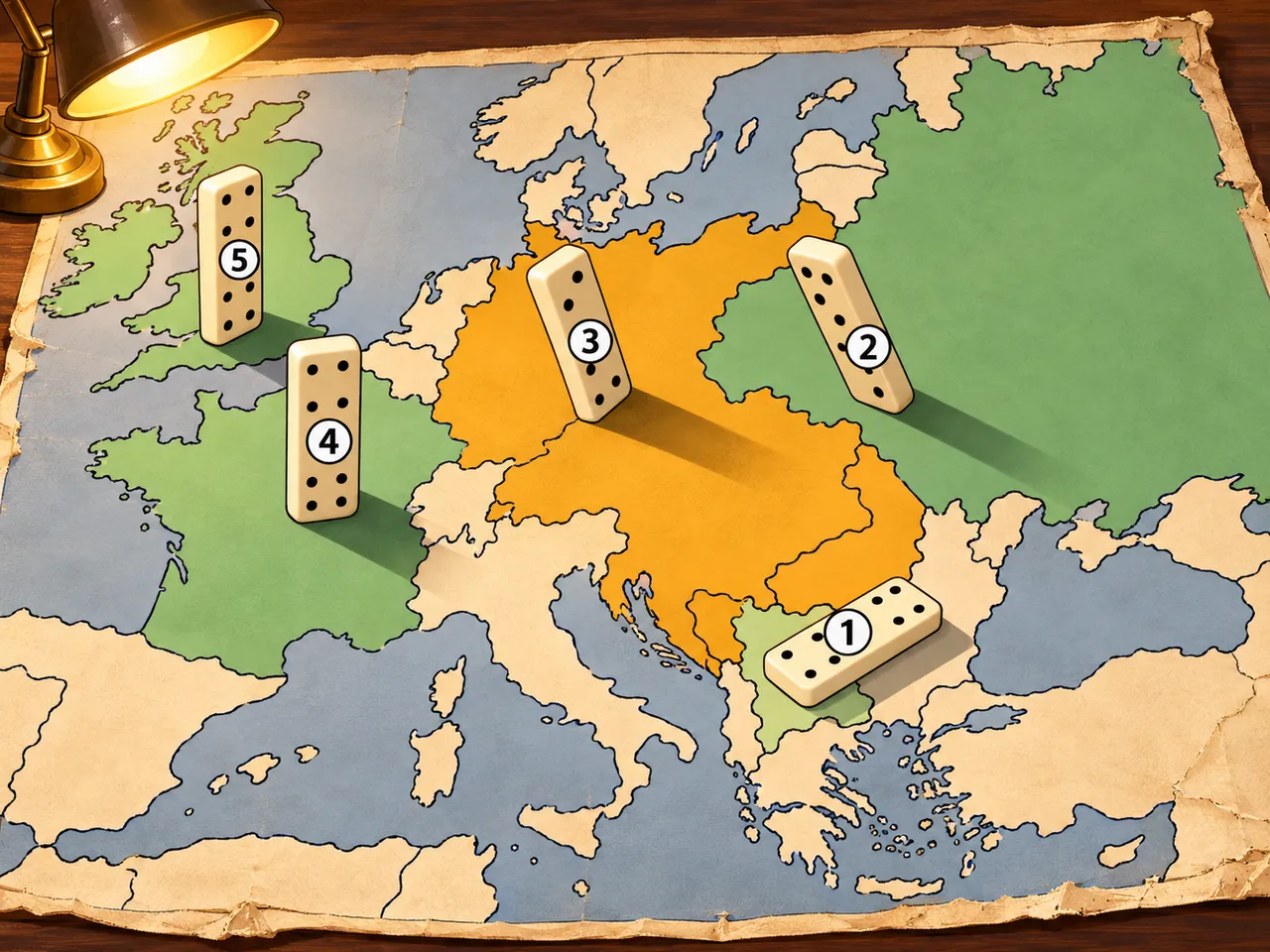
In summer 1914, Europe was split into two rival alliances: Germany and Austria-Hungary on one side, and France, Russia and Britain on the other. When Austria-Hungary attacked Serbia, each country’s promises to its allies pulled the next one in, and within about a week a Balkan quarrel had become a European war.
In the picture
- Serbia: Austria-Hungary declares war on it on 28 July 1914
- Russia: orders general mobilisation on 30 July to protect Serbia
- Germany: backs Austria-Hungary and declares war on Russia on 1 August
- France: Russia’s ally, Germany declares war on it on 3 August
- Britain: enters the war on 4 August after Germany invades Belgium
Examples
- A playground scuffle between two students grows into a fight between two whole groups of friends, because everyone feels they have to back their side.
- An argument in a group chat spreads when each person’s friends jump in to defend them.
Key takeaways
- The two blocs were the Triple Entente (France, Russia, Britain) and the Central Powers (Germany, Austria-Hungary).
- It took only about a week, from 28 July to 4 August 1914, for a local war to become a Europe-wide one.
Quiz: How Alliances Spread the War in 1914 (Age 15)
-
Which three countries made up the Triple Entente in 1914?
-
Why did Austria-Hungary’s attack on Serbia turn into a war across Europe?
-
How long did it take for the local war in the Balkans to become a Europe-wide war?
The answers, each with its explanation, are in the app. This quiz is free there while the lesson is in the free week.
Free app, optional subscription
App Store Google Play
Carry on in the app
At least one new illustrated lesson every weekday for your child’s year, with its quiz and a reminder at 6:15 pm.
Your child’s teacher does not use My Enhanced Teacher yet?
Tell them about it