Mon Prof Augmenté
Plants in Ice-Free Pockets
Open to everyone until Thursday, October 1
To keep it, print it while it is open.
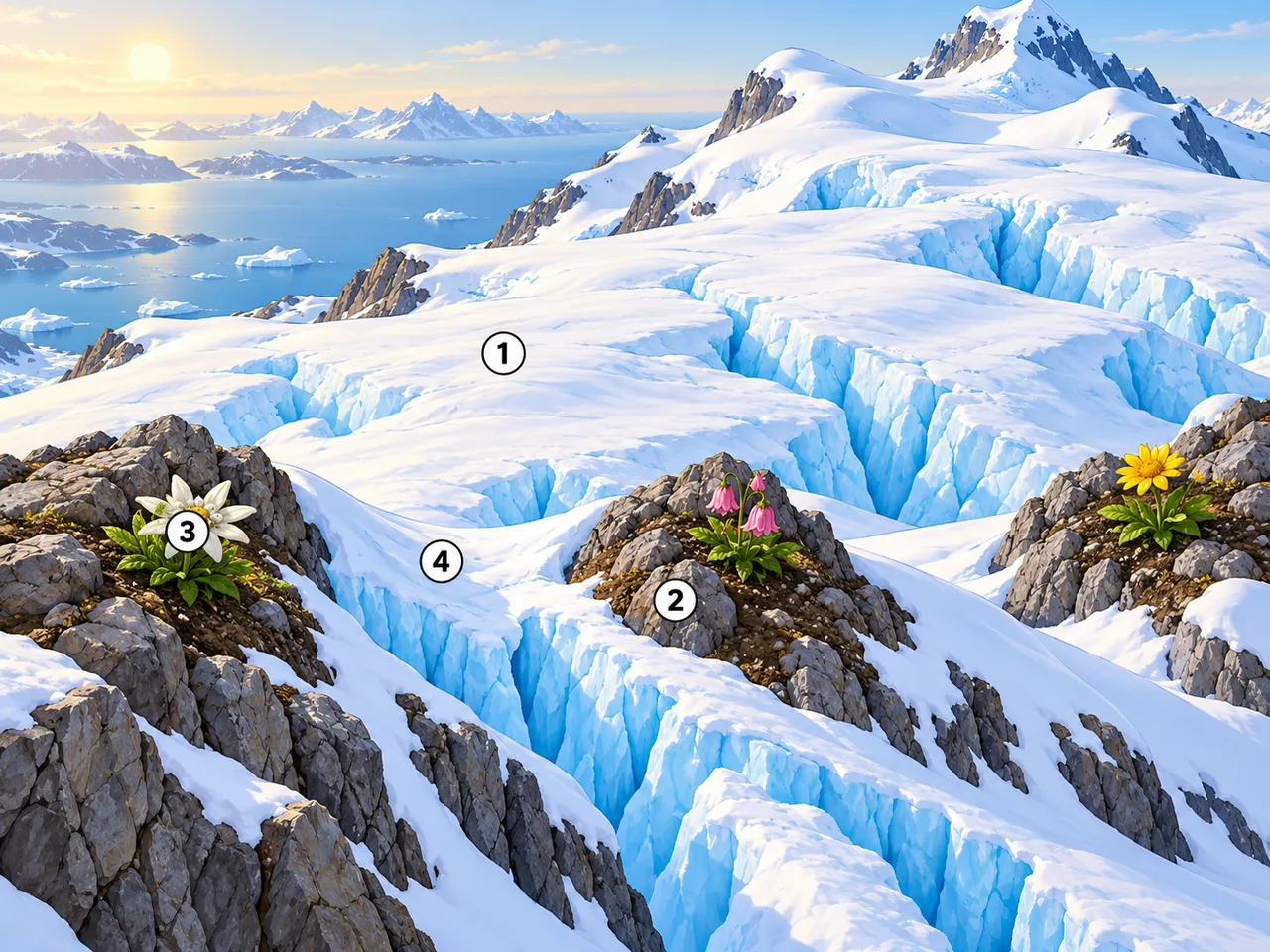
During ice ages, glaciers covered most mountain ranges. A few rocky pockets stayed free of ice, and the plants living there became isolated from one another.
In the picture
- The glacier surface: the ice sheet covering most of the mountain range.
- The bare rocky ground inside a pocket: an ice-free patch on the ridge.
- A small flowering plant: one species growing only in its pocket.
- The ice saddle between two pockets: the frozen gap that keeps the plants apart.
Examples
- Different kinds of finches on separate Galápagos islands cannot easily mix.
- Wildflowers on separate mountain peaks may be found on only one peak.
Key takeaways
- Ice sheets can split one plant population into small, separate groups.
- Long isolation can produce unique species with very small ranges.
Carry on in the app
Three questions on this lesson, to check the idea stuck. Free in the app while the lesson is in the free week.
At least one new illustrated lesson every weekday for your child’s year, with its quiz and a reminder at 6:15 pm.
Get the app
Free app, optional subscription
App Store Google Play