Mon Prof Augmenté
Finding your way in orienteering
Age 13 · Sports
Open to everyone until Friday, October 30
To keep it, print it while it is open.
In orienteering you use a map and a compass to find your way through unknown terrain and reach checkpoints in a set order. The fastest runner isn’t always the winner, because choosing a smart route matters just as much.
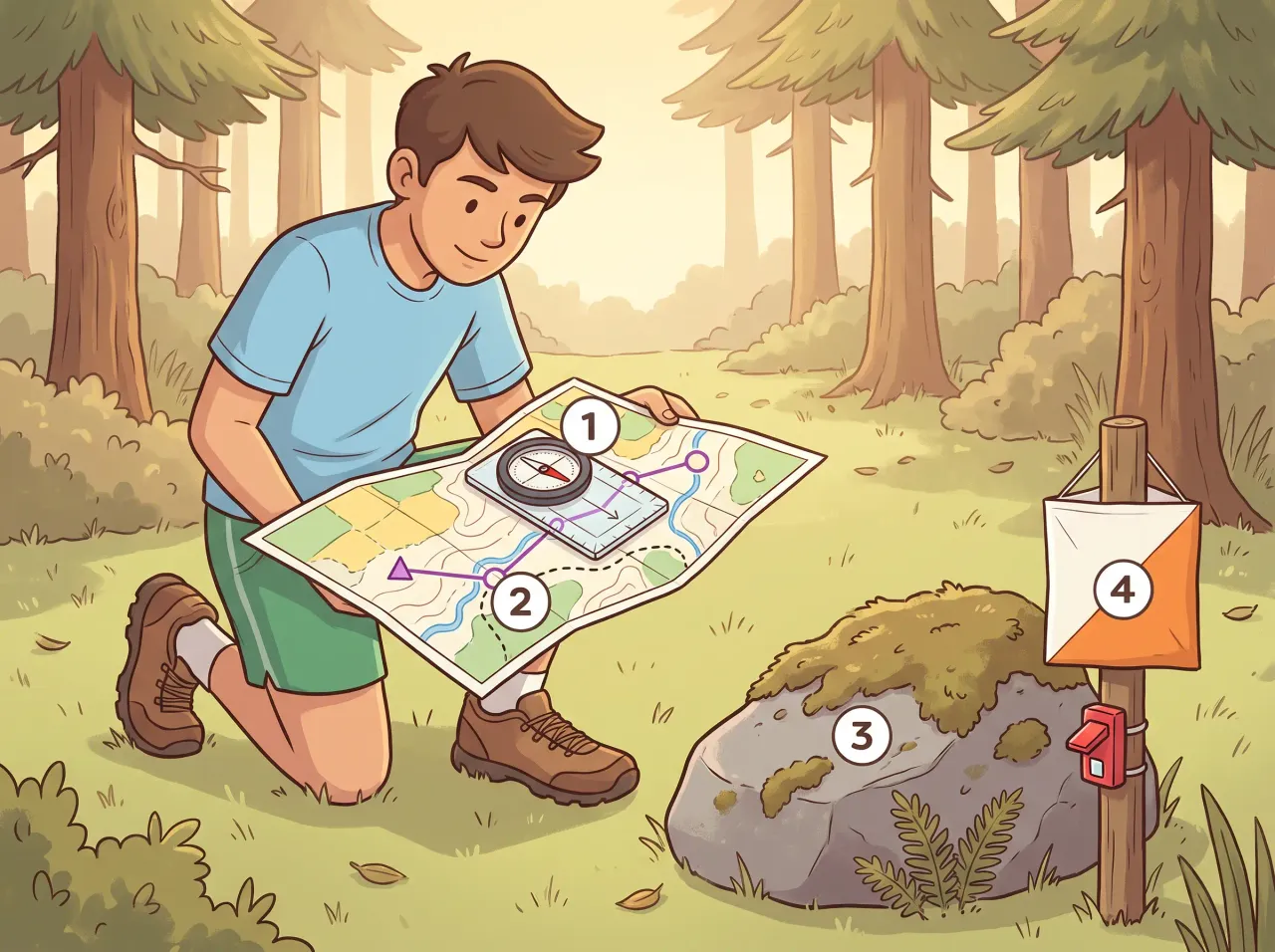
In the picture
- The compass: the red needle points north so you can turn the map to match the ground
- A circle on the map: the exact spot of the next control point
- The boulder: a landmark that is also drawn on the map and confirms where you are
- The control marker: the orange-and-white flag you must reach and punch to prove you were there
Examples
- Finding your way to a friend’s house in a new neighbourhood by following a paper map
- Using a trail map and signposts to reach a lake during a family hike
Key takeaways
- Turn the map so north on the map points the same way as the compass needle
- Check landmarks such as boulders, streams and paths to confirm where you are on the map
Quiz: Finding your way in orienteering (Age 13)
-
In orienteering, what should you do with the map before deciding which way to go?
-
You are in the middle of unfamiliar woods. What is the best way to check where you are on the map?
-
Why doesn’t the fastest runner always win an orienteering race?
The answers, each with its explanation, are in the app. This quiz is free there while the lesson is in the free week.
Get the app
Free app, optional subscription
App Store Google Play
Carry on in the app
At least one new illustrated lesson every weekday for your child’s year, with its quiz and a reminder at 6:15 pm.
Your child’s teacher does not use My Enhanced Teacher yet?
Tell them about it