Mon Prof Augmenté
Factories, Steam, and Railways
Open to everyone until Sunday, October 4
To keep it, print it while it is open.
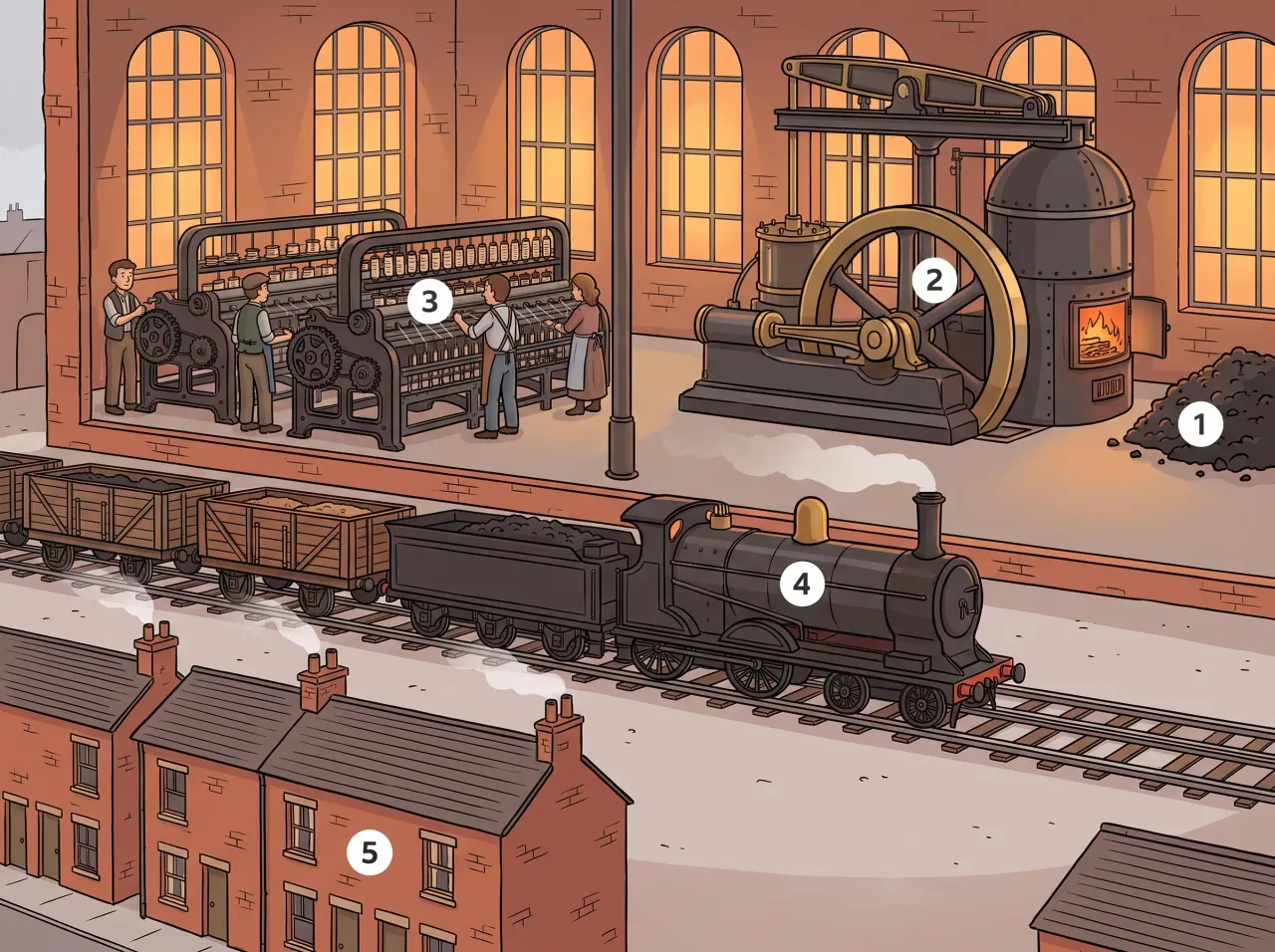
In the 19th century, machines in large factories began to run on steam power made from coal. Railways carried goods and people faster, and many workers moved to cities, so towns grew quickly.
In the picture
- Coal pile: fuel burned to heat the boiler and make steam
- Steam engine flywheel: converts steam pressure into turning power for machinery
- Spinning machines: mechanized textile tools that turn cotton into thread
- Steam locomotive: railway engine that pulls wagons and moves goods
- Brick terrace houses: crowded workers' homes built near the factories
Examples
- A kettle over a fire makes steam that can push a lid.
- A train carrying coal or cloth from one town to another.
Key takeaways
- Steam power let factories run machines without relying on wind, water, or muscle.
- Railways and factory jobs drew people to cities, causing rapid urban growth.
Carry on in the app
Three questions on this lesson, to check the idea stuck. Free in the app while the lesson is in the free week.
At least one new illustrated lesson every weekday for your child’s year, with its quiz and a reminder at 6:15 pm.
Get the app
Free app, optional subscription
App Store Google Play