Mon Prof Augmenté
Coal, Steam and Factory Mills
Age 13 · History

Around 1760 in Britain, coal-fired steam engines began powering textile machines and iron furnaces. This drew many people into new industrial towns built around mills and canals.
This picture is part of the full library
Every lesson is open to everyone for 7 days after it is published. This one came out on October 20, 2026: its text stays readable here, and its picture opens with a subscription.
The app is free. A subscription opens every lesson, in every school year.
Age 13: open this week
Browse Age 13
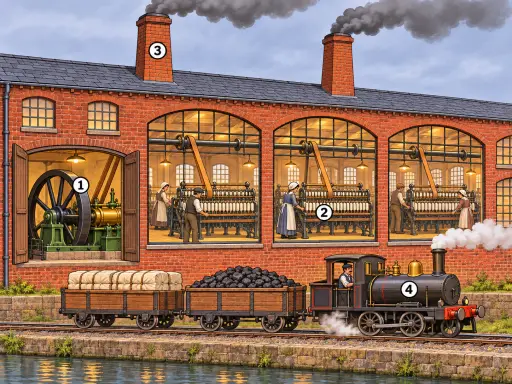
In the picture
- Steam engine flywheel: a wheel turned by steam that drives the mill belts.
- Spinning machine: a machine that twists cotton fibres into thread.
- Chimney: a tall shaft that carries smoke away from coal-fired boilers.
- Coal barge: a canal boat carrying fuel to the mill and ironworks.
- Iron furnace door: the opening of a furnace where iron ore is smelted into molten iron.
Examples
- A steam engine pushes like a kettle lifting its lid with steam, but that push turns a wheel.
- A canal barge moves heavy coal like a freight truck, but on water.
Key takeaways
- Coal and steam let machines do work that people or animals once did.
- Textile mills, ironworks, and canals pulled workers into fast-growing factory towns.
Quiz: Coal, Steam and Factory Mills (Age 13)
-
According to the card, what did coal and steam let machines do?
-
According to the card, what pulled workers into fast-growing factory towns?
-
What did the spinning machine do?
The answers, each with its explanation, are in the app. This lesson has left the free week, so its quiz is part of the subscription.
Free app, optional subscription
App Store Google Play
Carry on in the app
At least one new illustrated lesson every weekday for your child’s year, with its quiz and a reminder at 6:15 pm.
Your child’s teacher does not use My Enhanced Teacher yet?
Tell them about it