Mon Prof Augmenté
A Steam-Powered Industrial Town
Age 13 · History

In 19th-century Europe, factories burned coal to make steam that drove machines. Railways and canals moved coal, goods, and workers, turning towns into crowded industrial cities.
This picture is part of the full library
Every lesson is open to everyone for 7 days after it is published. This one came out on October 12, 2026: its text stays readable here, and its picture opens with a subscription.
The app is free. A subscription opens every lesson, in every school year.
Age 13: open this week
Browse Age 13
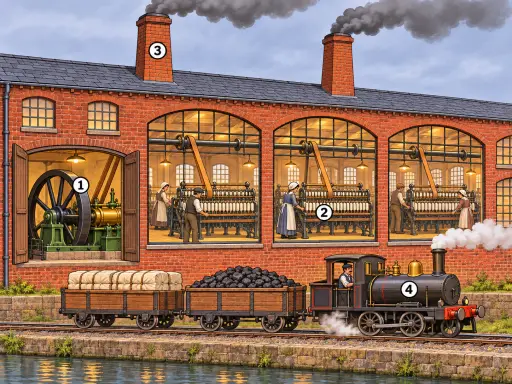
In the picture
- Brick chimney and smoke: coal burned to heat water and make steam for factory machinery
- Textile mill with rows of windows: a large factory where machines spun and wove cloth
- Steam locomotive on a viaduct: an engine pulling railway cars over the town
- Terrace of workers’ houses: small brick homes built close to factories for laborers
- Canal barge loaded with coal: a boat carrying coal to mills and steam engines
Examples
- A steam train pulling carriages along a railway line
- A coal fire boiling water to make steam
Key takeaways
- Steam power let factories run machines without relying on wind, water, or human muscle.
- Railways and canals moved raw materials and goods faster, helping industrial cities grow.
Quiz: A Steam-Powered Industrial Town (Age 13)
-
According to the card, what did steam power allow factories to do?
-
How did railways and canals help industrial cities grow?
-
What was coal used for in the steam-powered factory town?
The answers, each with its explanation, are in the app. This lesson has left the free week, so its quiz is part of the subscription.
Free app, optional subscription
App Store Google Play
Carry on in the app
At least one new illustrated lesson every weekday for your child’s year, with its quiz and a reminder at 6:15 pm.
Your child’s teacher does not use My Enhanced Teacher yet?
Tell them about it