Mon Prof Augmenté
Why we have seasons
Age 12 · Astronomy
Open to everyone until Thursday, November 12
To keep it, print it while it is open.
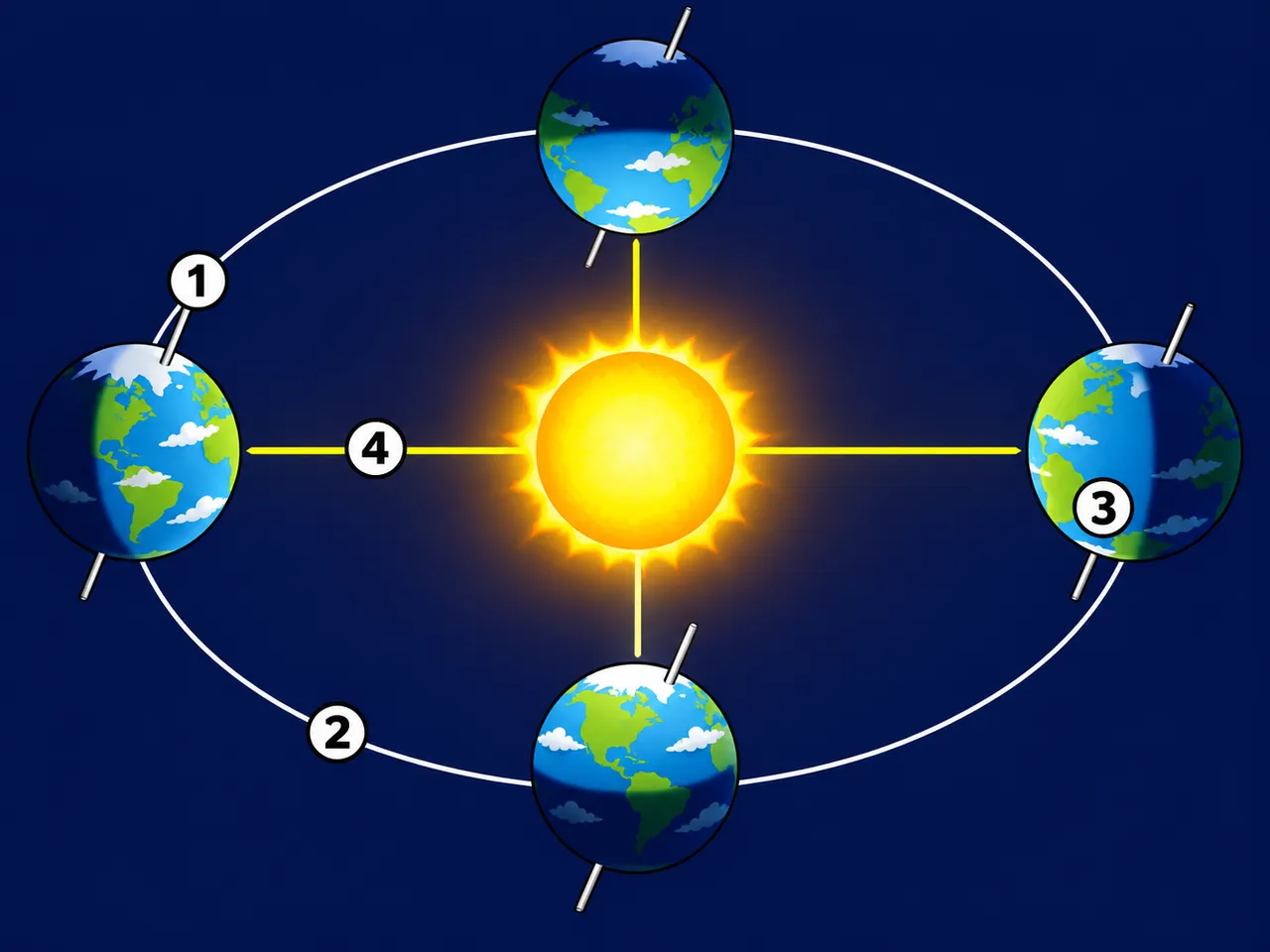
Earth’s axis is tilted about 23 degrees and always points the same way as Earth circles the Sun in a year. So during the year, each half of Earth leans toward the Sun, then away from it.
In the picture
- Tilted axis: always leans the same way, about 23 degrees
- Yearly orbit: Earth travels around the Sun
- Half leaning away: weaker, slanted sunlight, so winter
- Sunlight on the half leaning toward the Sun: direct, strong rays, so summer
Examples
- In July the north has long warm days while Australia has cold winter days.
- Near the poles the Sun stays up all day in summer and hardly rises in winter.
Key takeaways
- Seasons come from the tilt of Earth’s axis, not from distance to the Sun.
- When the north has summer, the south has winter.
Quiz: Why we have seasons (Age 12)
-
What is the main reason we have seasons?
-
When it is summer in the northern half of Earth, what season is it in the southern half?
-
Why is it winter in the half of Earth that is leaning away from the Sun?
The answers, each with its explanation, are in the app. This quiz is free there while the lesson is in the free week.
Get the app
Free app, optional subscription
App Store Google Play
Carry on in the app
At least one new illustrated lesson every weekday for your child’s year, with its quiz and a reminder at 6:15 pm.
Your child’s teacher does not use My Enhanced Teacher yet?
Tell them about it