Mon Prof Augmenté
The Four Families of the Orchestra
Age 11 · Music

An orchestra has four families of instruments: strings, woodwinds, brass and percussion. Each family makes its sound in a different way, which gives it its own special tone colour, called timbre.
This picture is part of the full library
Every lesson is open to everyone for 7 days after it is published. This one came out on November 1, 2026: its text stays readable here, and its picture opens with a subscription.
The app is free. A subscription opens every lesson, in every school year.
Age 11: open this week
Browse Age 11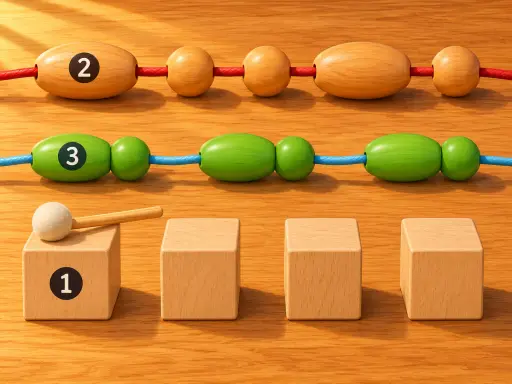

In the picture
- Strings: a bowed or plucked string vibrates
- Woodwinds: air vibrates inside a tube, set off by a reed or by blowing across an edge
- Brass: the player’s buzzing lips make the air in the metal tube vibrate
- Percussion: the instrument vibrates when it is struck, shaken or scraped
Examples
- Plucking a stretched rubber band makes it buzz like a tiny string
- Blowing across the top of an empty bottle makes a hoot like a flute
Key takeaways
- Every sound comes from something vibrating
- Timbre is why a violin and a trumpet sound different even when they play the same note
Quiz: The Four Families of the Orchestra (Age 11)
-
How does a brass instrument, like a trumpet, make its sound?
-
A violin and a trumpet play exactly the same note. Why do they still sound different?
-
What do all four families of the orchestra need in order to make a sound?
The answers, each with its explanation, are in the app. This lesson has left the free week, so its quiz is part of the subscription.
Free app, optional subscription
App Store Google Play
Carry on in the app
At least one new illustrated lesson every weekday for your child’s year, with its quiz and a reminder at 6:15 pm.
Your child’s teacher does not use My Enhanced Teacher yet?
Tell them about it