Mon Prof Augmenté
Settling and Filtering Muddy Water
Age 11 · Chemistry

When muddy water is left still, heavy bits sink to the bottom. Pouring the clearer water through a paper filter catches the remaining bits and lets clear water through.
This picture is part of the full library
Every lesson is open to everyone for 7 days after it is published. This one came out on October 13, 2026: its text stays readable here, and its picture opens with a subscription.
The app is free. A subscription opens every lesson, in every school year.
Age 11: open this week
Browse Age 11
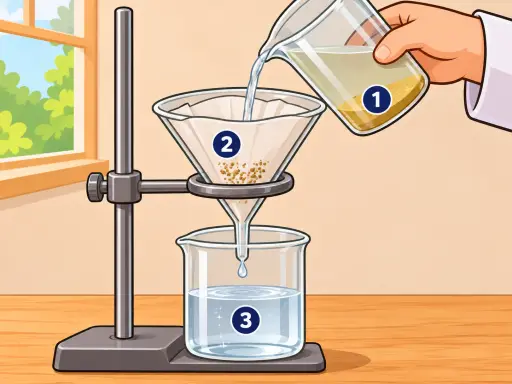
In the picture
- The settled mud layer: solid bits resting at the bottom.
- The pale water above the mud: liquid with most solids sunk below.
- The paper filter with brown grains: a barrier that traps solid bits.
- The clear drops below the funnel: filtered water passing through.
Examples
- Muddy puddle water left in a bucket, then poured through a cloth.
- Tea leaves or pasta bits strained from water with a sieve or paper filter.
Key takeaways
- Settling lets heavy solids fall to the bottom.
- A filter traps small solids while liquid passes through.
Quiz: Settling and Filtering Muddy Water (Age 11)
-
When muddy water is left still, what happens to the heavy solid bits?
-
What does the paper filter do in this method?
-
After the mud has settled, why is the clearer water poured through a paper filter?
The answers, each with its explanation, are in the app. This lesson has left the free week, so its quiz is part of the subscription.
Free app, optional subscription
App Store Google Play
Carry on in the app
At least one new illustrated lesson every weekday for your child’s year, with its quiz and a reminder at 6:15 pm.
Your child’s teacher does not use My Enhanced Teacher yet?
Tell them about it