Mon Prof Augmenté
The fall factor in climbing
Age 14 · Physics
Open to everyone until Tuesday, November 24
To keep it, print it while it is open.
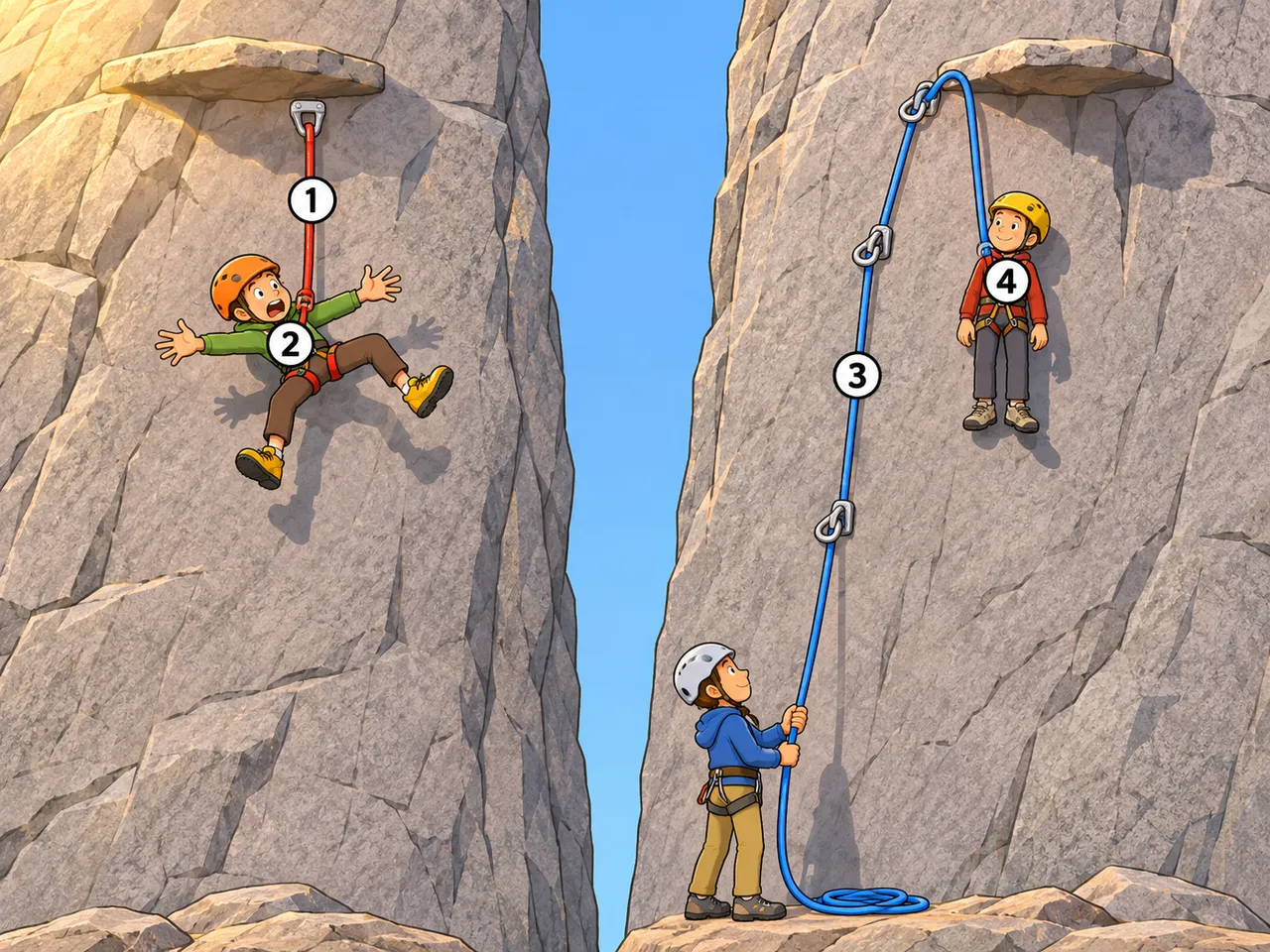
How hard a fall feels depends on the fall height divided by the length of rope that can stretch to absorb it. The same fall is brutal on a short rope and gentle on a long one.
In the picture
- Short rope: very little length to stretch and absorb the fall
- Climber on the short rope: stopped abruptly, with a large force on the body
- Long rope through several clips: a lot of length stretching like a spring
- Climber on the long rope: same fall height, slowed gradually with a smaller force
Examples
- A climber who falls 4 m with only 2 m of rope out has a fall factor of 2, the harshest in normal climbing.
- A climber who falls 4 m with 20 m of rope out has a fall factor of 0.2 and feels a soft catch.
Key takeaways
- Fall factor = fall height ÷ length of rope out.
- More rope stretching means a longer stopping time and a smaller force.
Quiz: The fall factor in climbing (Age 14)
-
How do you work out the fall factor of a climbing fall?
-
Two climbers fall the same height. One has a short rope out, the other a long rope out. Who gets the harder stop?
-
Why does having more rope out make a fall gentler on the climber?
The answers, each with its explanation, are in the app. This quiz is free there while the lesson is in the free week.
Get the app
Free app, optional subscription
App Store Google Play
Carry on in the app
At least one new illustrated lesson every weekday for your child’s year, with its quiz and a reminder at 6:15 pm.
Your child’s teacher does not use My Enhanced Teacher yet?
Tell them about it