Mon Prof Augmenté
Rust in a sealed flask
Age 13 · Science
Open to everyone until Tuesday, November 17
To keep it, print it while it is open.
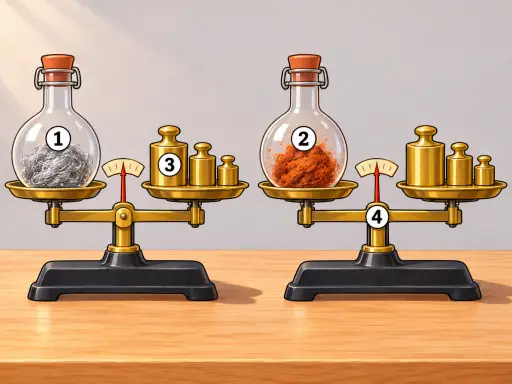
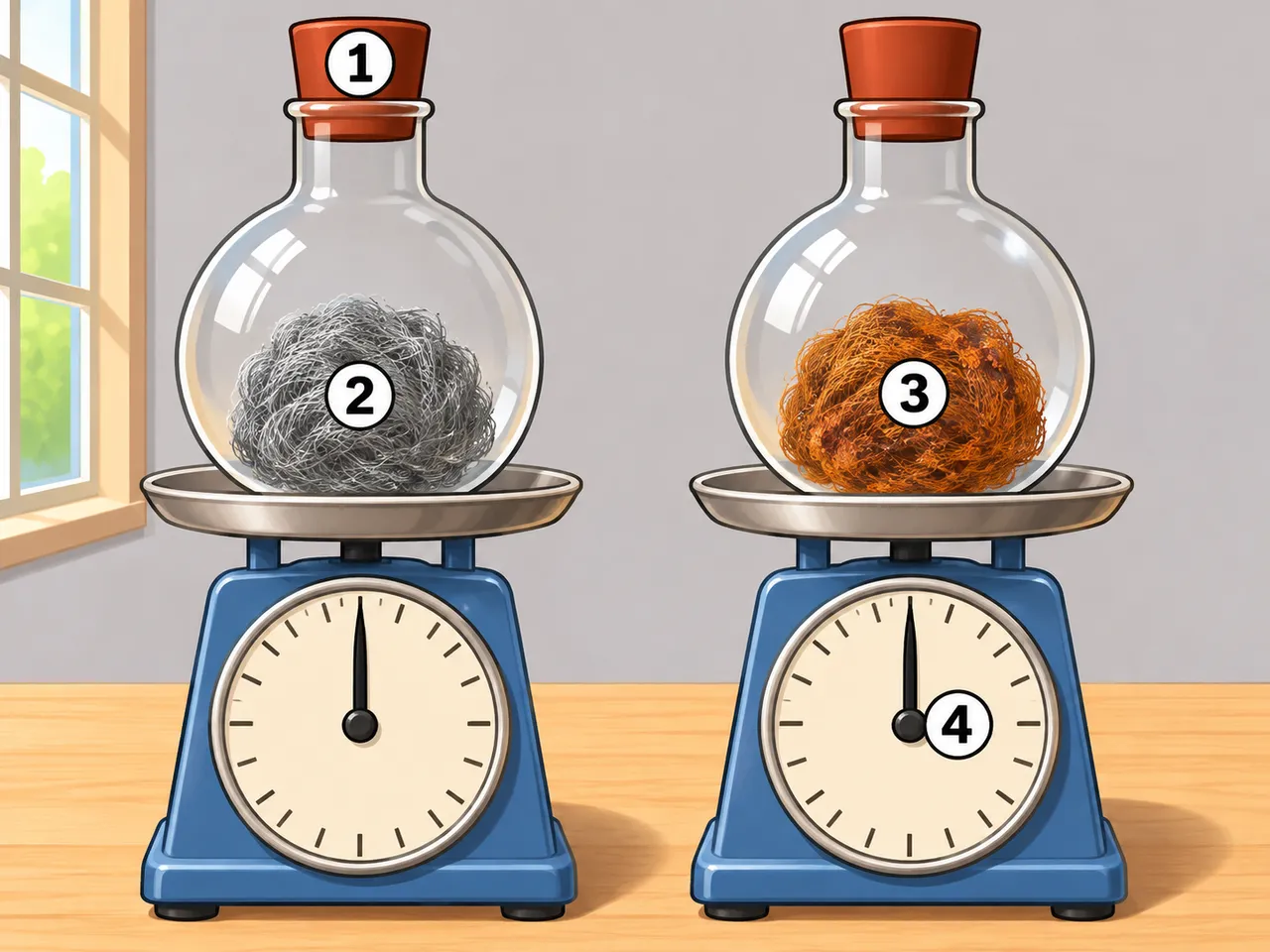
When steel wool rusts inside a sealed flask, the iron joins with oxygen from the air to form a new substance. Nothing gets in or out, so the balance reads the same total mass before and after the reaction.
In the picture
- Tight stopper: the flask is a closed system, so no matter can get in or out
- Grey steel wool and air: the reactants, iron and oxygen
- Rust-brown steel wool: the product, iron oxide (rust)
- Pointer in the same place: the total mass has not changed
Examples
- A sealed bottle with vinegar and baking soda weighs the same before and after it fizzes.
- A log burning in the open seems to lose mass, because the smoke and gases escape into the air.
Key takeaways
- In a closed system, the total mass of the reactants equals the total mass of the products.
- In a reaction, atoms are rearranged, never created or destroyed.
Quiz: Rust in a sealed flask (Age 13)
-
Steel wool rusts inside a sealed flask. How does the total mass after the reaction compare to the total mass before?
-
Why does the flask need to be tightly sealed to show that mass is conserved?
-
What happens to the atoms during a chemical reaction?
The answers, each with its explanation, are in the app. This quiz is free there while the lesson is in the free week.
Get the app
Free app, optional subscription
App Store Google Play
Carry on in the app
At least one new illustrated lesson every weekday for your child’s year, with its quiz and a reminder at 6:15 pm.
Your child’s teacher does not use My Enhanced Teacher yet?
Tell them about it