Mon Prof Augmenté
Plants Make Their Own Food
Age 11 · Biology
Open to everyone until Friday, October 30
To keep it, print it while it is open.
A green plant uses sunlight, water, carbon dioxide from the air and mineral salts from the soil to build its own leaves, stems and roots. Animals cannot do this, so plants are the producers that start every food chain.
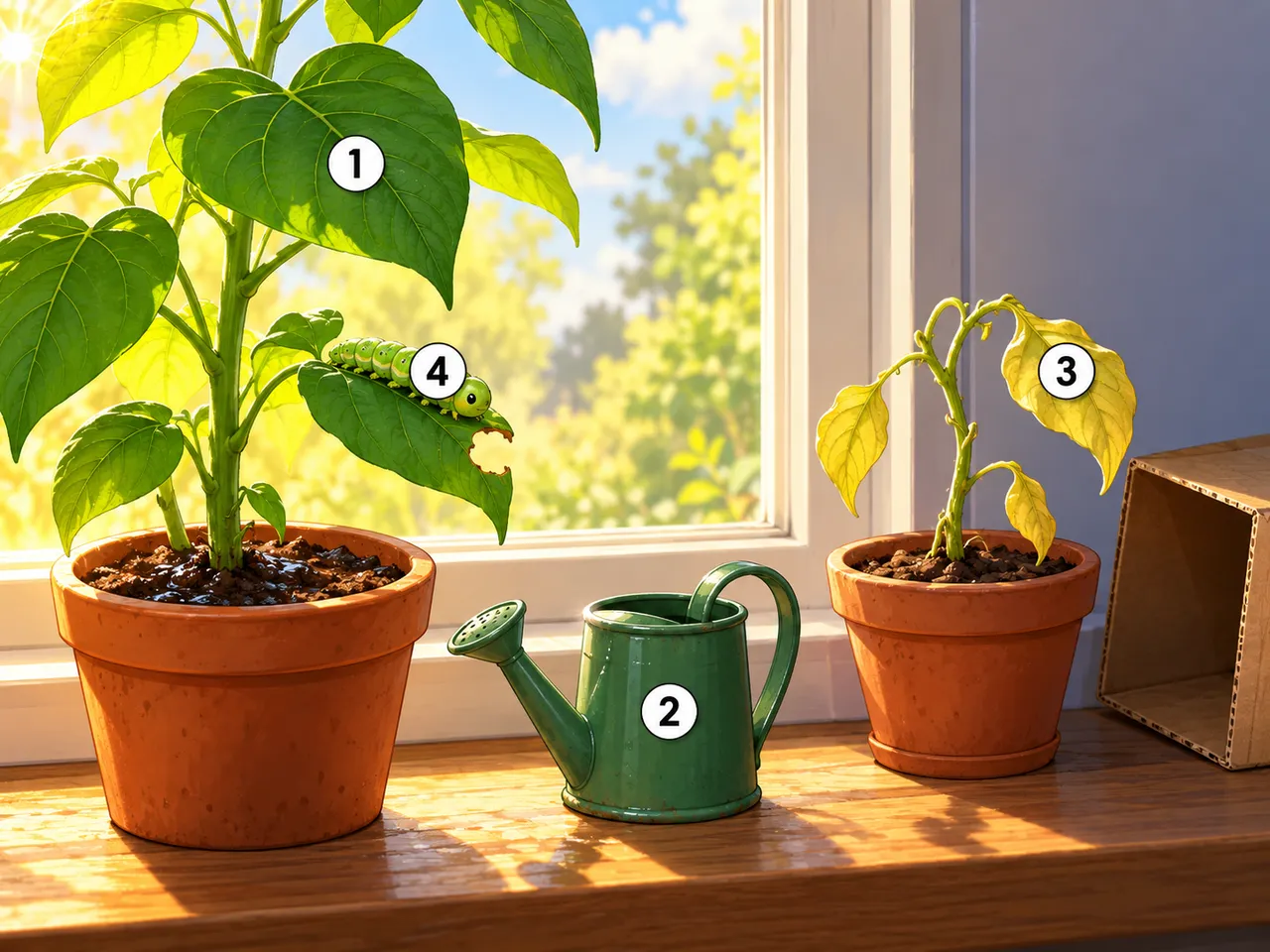
In the picture
- Green leaf in sunlight: it uses light to make the plant’s own matter
- Watering can: water and mineral salts from the soil feed the plant
- Pale plant kept in the dark: without light it cannot make enough matter
- Caterpillar eating a leaf: the animal gets its food from the producer
Examples
- Grass in a field grows from light, water and air, and then cows eat it
- A potted plant left in a dark cupboard turns yellow and weak
Key takeaways
- Green plants make their own organic matter using light
- Plants are the producers at the start of food chains
Quiz: Plants Make Their Own Food (Age 11)
-
Where does a green plant get the matter it needs to build its leaves, stems and roots?
-
A plant is kept in the dark for a long time and grows pale and weak. Why?
-
Why are green plants called the producers at the start of food chains?
The answers, each with its explanation, are in the app. This quiz is free there while the lesson is in the free week.
Get the app
Free app, optional subscription
App Store Google Play
Carry on in the app
At least one new illustrated lesson every weekday for your child’s year, with its quiz and a reminder at 6:15 pm.
Your child’s teacher does not use My Enhanced Teacher yet?
Tell them about it