Mon Prof Augmenté
Mixing paint colours
Age 11 · Art
Yellow, red and blue are the primary colours, and mixing two of them makes a secondary colour. On a colour wheel, each secondary colour sits opposite the primary it does not contain.
This picture is part of the full library
Every lesson is open to everyone for 7 days after it is published. This one came out on November 4, 2026: its text stays readable here, and its picture opens with a subscription.
The app is free. A subscription opens every lesson, in every school year.
Age 11: open this week
Browse Age 11
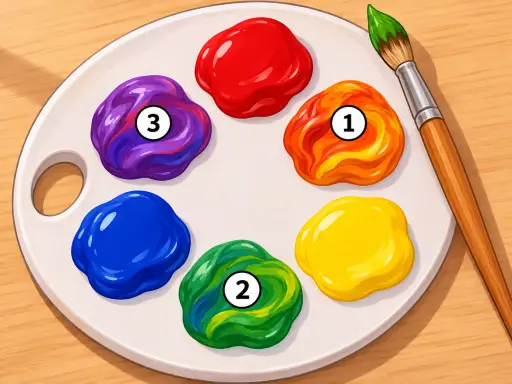
In the picture
- Yellow paint: a primary colour that cannot be made by mixing
- Green paint: made by mixing yellow and blue
- Violet paint: made by mixing red and blue
Examples
- Mixing yellow and red paint makes the orange of a sunset.
- Mixing blue and yellow makes the green of grass.
Key takeaways
- Red, yellow and blue are primary colours; orange, green and violet are secondary.
- Complementary colours sit opposite each other on the colour wheel.
Quiz: Mixing paint colours (Age 11)
-
Which of these colours can NOT be made by mixing other paints?
-
What colour do you get by mixing yellow and blue paint?
-
On a colour wheel, which colour sits opposite yellow?
The answers, each with its explanation, are in the app. This lesson has left the free week, so its quiz is part of the subscription.
Free app, optional subscription
App Store Google Play
Carry on in the app
At least one new illustrated lesson every weekday for your child’s year, with its quiz and a reminder at 6:15 pm.
Your child’s teacher does not use My Enhanced Teacher yet?
Tell them about it