 Mon Prof Augmenté
Natural hazards
Age 9 Geography
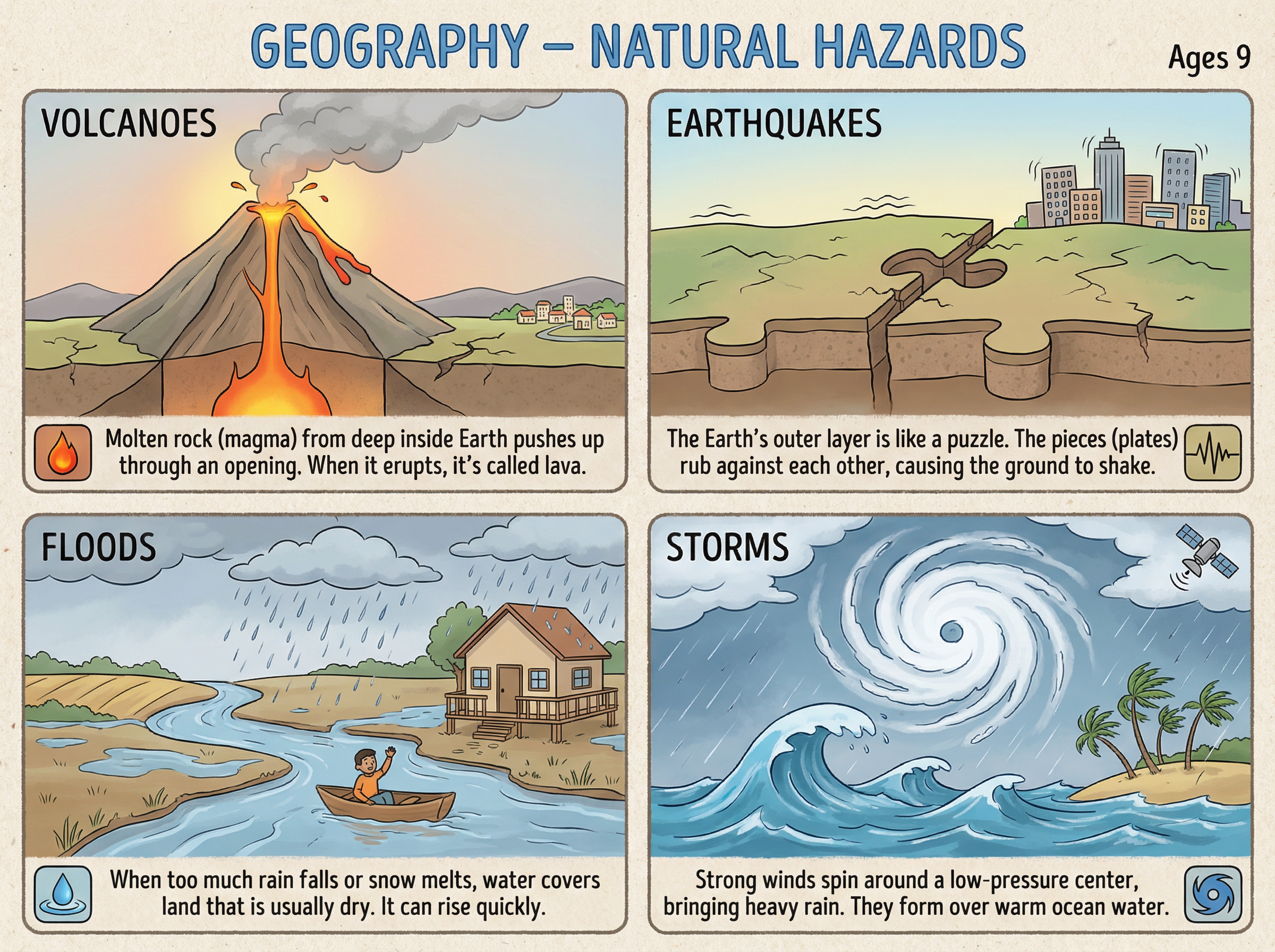
The Earth can be powerful in four different ways, and each one starts somewhere different. Volcanoes happen when melted rock called magma pushes up from deep underground and pours out as lava. Earthquakes happen because the Earth's outer layer is cracked into huge pieces, like a puzzle, and the pieces rub against each other until the ground shakes. Floods come when so much rain falls or so much snow melts that water covers land that is normally dry, and storms are strong winds spinning around a calm centre, forming over warm ocean water and bringing heavy rain.
Examples
- After a long night of rain, the stream or gutter near your home fills right up and water spreads over the grass that is usually dry.
- During a big storm the wind bends the trees sideways and the weather forecast shows a spinning swirl of cloud moving towards the coast.
- You feel a rumble and see a glass wobble on the table when something heavy shakes the ground.
Key takeaways
- Volcanoes and earthquakes come from inside the Earth; floods and storms come from water and weather.
- Each hazard gives warning signs, so people can watch the weather and the ground and get to a safe place.