 Mon Prof Augmenté
Leaf and Snail Swap Gases
Age 16 Biology
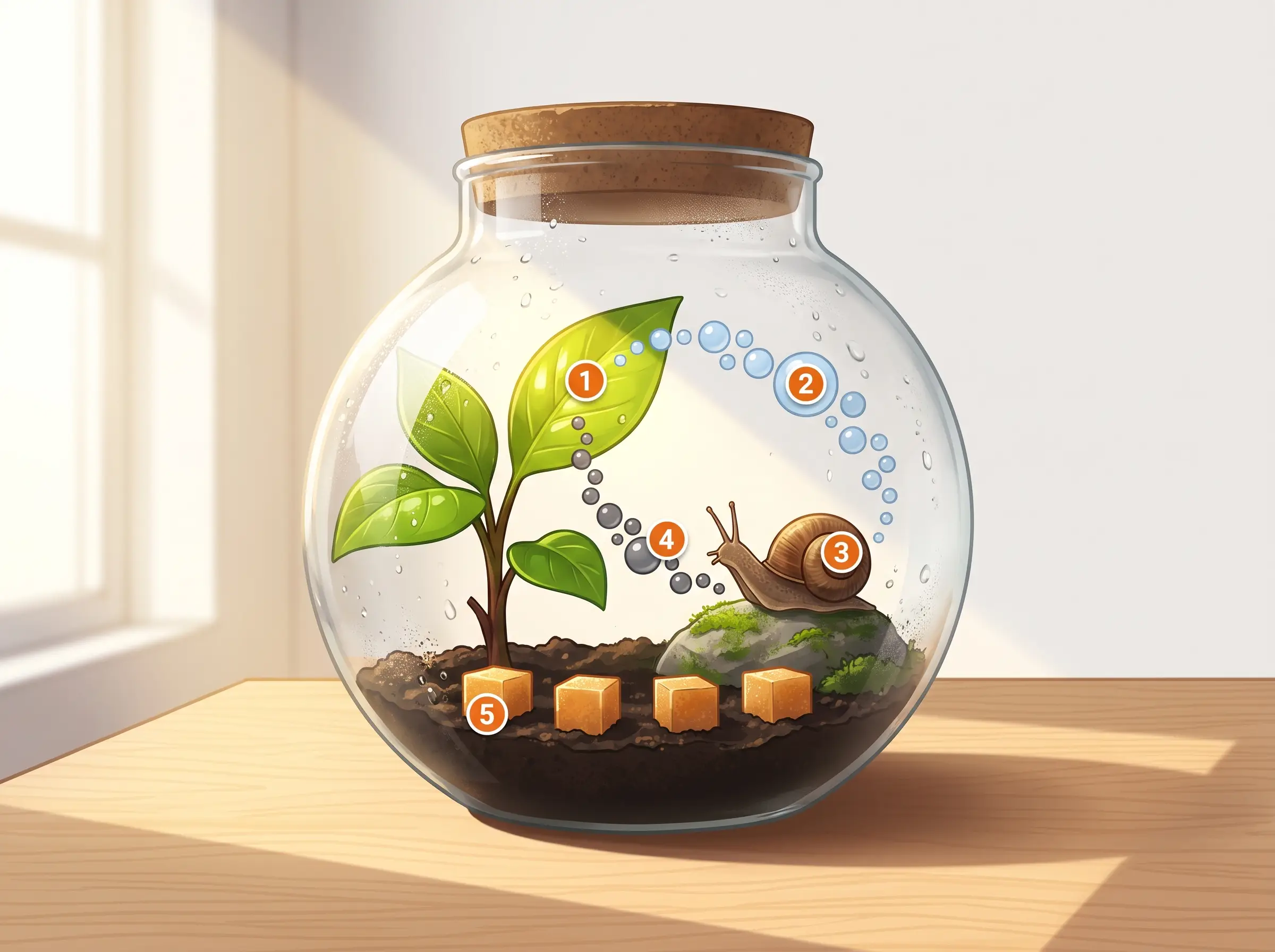
Inside the sealed jar the leaf takes in carbon dioxide and water and, using sunlight, builds sugar while releasing oxygen. The snail does the reverse, taking in oxygen and sugar and giving back carbon dioxide and water.
Step by step
- The large sunlit leaf, where light energy turns water and carbon dioxide into sugar.
- The pale blue spheres rising from the leaf, the oxygen released by photosynthesis.
- The snail's shell, marking the animal that breaks down sugar using oxygen.
- The dark grey spheres returning to the leaf, the carbon dioxide given off by respiration.
- The amber sugar cubes at the stem base, the stored chemical energy both processes share.
Examples
- A planted aquarium, where the water plants release oxygen in daylight while the fish release carbon dioxide.
- Running for a bus: your muscles break down sugar using oxygen, so you breathe out more carbon dioxide.
Key takeaways
- Photosynthesis stores energy in sugar and releases oxygen; respiration releases that energy and returns carbon dioxide and water.
- Plants respire day and night, but they photosynthesise only when there is light.
A quiz goes with this lesson
Three questions asked a few days later, to check the idea stuck — not that the picture was seen. In the app, with a subscription.